
Marina & Waterfront Pest Control
A marina is not one building. It is a yard, a row of sheds, and several hundred private spaces the operator does not control, sitting in salt air that destroys ordinary exclusion material. The work is the shared structures, the gear storage, and an honest split of what is yours and what belongs to a slip holder.
Call 360-410-2199 Request a free inspection
What gets checked, at a glance
| Visit records | Dated per visit: findings, actions, device locations, and recommendations for the operator and for tenants |
|---|---|
| Operator or tenant | Each finding marked in writing as an operator item or a slip holder item, every visit |
| Operator's scope | Shared buildings, gear storage structures, the yard and its margins, waste handling, and tenant rules |
| Vessel owner's scope | The inside of the boat, its stores, its cover, and its winter housekeeping |
| Exclusion material | Stainless mesh, matched fasteners, heavier gauge and marine-rated sealants in place of galvanized |
| Best work window | Between haul-out and spring commissioning, when the yard is full, static and quiet |
| Devices | Placed beyond reach of the public and pets, with a map someone new to the site can follow |
| Birds | Not handled; gull work goes to a named specialist |
A marina is not a building
Almost everything that makes marina work different comes from one fact: the operator is responsible for a site, not a structure, and a large part of what is on that site belongs to somebody else.
A typical operation here is a yard, a set of shared buildings — restrooms, laundry, chandlery, offices, a shop — a run of gear lockers or storage sheds, waste handling somewhere, and then several hundred private spaces in the form of vessels, each of which is a small building with its own owner, its own contents and its own housekeeping.
That structure is why a marina pest problem behaves unlike a warehouse or a restaurant. The pressure is spread across many small spaces rather than concentrated in one, the operator can only act directly on a minority of it, and the part they cannot act on is often where the population is actually living.
The job, then, is not just treatment. It is working the parts you control hard enough that they stop supporting a population, and being clear and documented about the parts you do not.
Salt, and why exclusion fails differently here
This is the technical thing most often got wrong on the waterfront, and it is worth putting near the top because it costs money twice.
Standard exclusion material is galvanized. Galvanized hardware cloth, galvanized fasteners, plain steel screws into a plate. Inland, at a house in Lynden or Ferndale, that is entirely appropriate and will last many years. In marine air it is not. Salt accelerates the corrosion of the zinc coating and then the steel under it, and a patch that would have lasted a decade three miles inland can be soft enough to push a finger through in a few seasons at a dock.
There is a second failure that is sneakier. Fasten a galvanized mesh to an aluminum structure — and there is a great deal of aluminum at a marina — and you have two dissimilar metals in a salt environment, which is a battery. The galvanic corrosion that follows attacks the joint specifically, so the mesh is fine and the fixing is gone, which is the failure nobody inspects for because the patch still looks present.
So waterfront exclusion is specified differently:
- Stainless mesh at the openings that matter, rather than galvanized
- Stainless or appropriately matched fasteners, chosen against the substrate rather than out of the same box used everywhere else
- Heavier gauge where a lighter one would be adequate inland
- Isolation at dissimilar-metal joints where it is practical
- Sealants rated for marine exposure rather than general-purpose
It costs more. We would rather explain the difference at the quote than install the cheap version, watch it fail in three winters, and be back doing the same opening again — which is the pattern we most often inherit at these sites.
Where the rodents actually live
Gear lockers and storage sheds. The center of it on most sites. Lockers hold line, canvas, cushions, life jackets, sails, foul weather gear and — the part that matters — food. Snacks left in a locker over winter, dry goods in a plastic tub, birdseed, dog food. Soft material for nesting and food in the same unheated, undisturbed box, times two hundred lockers.
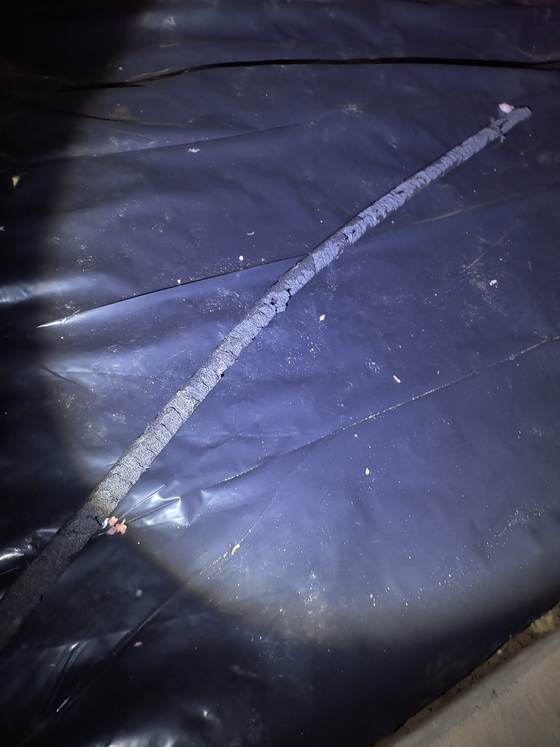
Vessels in layup. A boat pulled for the winter and covered is a warm, dry, still, dark structure full of upholstery and often with a galley that was not emptied properly. It is close to ideal, and it is the space the operator has the least control over.
Waste handling. Dumpsters and the ground around them, particularly at sites with a restaurant, a fish-cleaning station or heavy seasonal visitor traffic.
Shared buildings. Restrooms, laundry, the shop. Warm, plumbed and open to the public, which means both access and food arriving continuously.
Under decking and boardwalk, and in the rip-rap. Structural voids at ground level, adjacent to a food supply and largely unobservable. On several sites here this is the reservoir that everything else is drawing from.
Stored equipment and cradles. Anything that has stood in one place for a season, particularly if it is covered.
Norway rats are the species that most often makes a marina problem visible — they burrow in workable ground near reliable food, and the ground around waste handling and along a rip-rap edge is exactly that. Mice are the broader background pressure, especially where the site backs onto vegetation or open ground rather than water on all sides.
Gulls, and where our work stops
Gulls are the complaint an operator hears most and the one we can do least about directly, because bird work is not a service we offer. Keeping them off a structure means netting and nest work, native birds carry legal protections that make that specialist territory, and we would rather name somebody set up for it than take the booking.
The overlap is real, though. A fish-cleaning station or an open waste area that feeds gulls feeds rats too, and an abandoned nest on a shed roof sends mites and carpet beetles inward into whatever is below it. Both of those are ours.
Wasps, spiders and the seasonal nuisance
Wasps and hornets are a genuine safety and access problem at a marina rather than a nuisance one. Nests turn up in equipment sheds, in the eaves over a working door, inside covered vessels, in electrical enclosures, and in stored gear that has not moved for a month. August and September are the heaviest weeks, which is also peak season on the water, so the exposure is highest exactly when the site is busiest. A nest by a fuel dock or a gate is treated as urgent.
Spiders are heavier on the waterfront than almost anywhere else we work, for the ordinary reason that there is more for them to eat — insects come off the water in numbers and the structures give endless anchor points. Webbing on railings, under docks and across covered vessels is largely a cosmetic and customer-perception problem, and it is managed rather than solved. The Washington State Department of Health is plain that spiders rarely bite and that very few of ours are harmful to people, which is why this stays a housekeeping item. It is also, for most marinas, the single most visible pest issue members comment on.
Cluster flies and overwintering insects gather on sunlit walls in autumn and work into the shared buildings through the same gaps everything else uses.
Fish cleaning, food service and the chandlery
Three parts of a marina behave like different businesses and are worth pulling out, because each one imports a pest problem the rest of the site does not have.

Fish-cleaning stations are the highest-value fix on many sites and the one most often left alone. Waste, water and a structure, in the open, with gulls and rats both attending. What decides it is almost never treatment — it is how quickly waste leaves, whether the station drains and dries between uses, and whether the surrounding ground and structure can be washed down rather than merely hosed. A station that stays wet with organic residue is a breeding site for flies as well as a draw for everything larger.
Restaurants, cafes and bars on site bring the whole of food-service pest control with them: a grease interceptor, a dry store, a dish area, waste handling on a different schedule from the rest of the yard, and a health inspection that is nothing to do with the marina’s own compliance. These are usually a separate scope inside the same program, and treating them as part of the general site work is how both ends get underserved.
Chandleries and stores carry packaged goods, and packaged goods bring stored product insects — beetles and moths that arrive inside the product rather than through a door. The response is incoming stock inspection and rotation, not perimeter treatment, and it belongs to whoever manages the stock rather than to the pest program.
What we need from the operator
A program at a marina depends more on site management than almost any other account we run, so these are set out at the quote rather than raised later:
- Waste emptied on a schedule that holds through the busy season, not one that works in February
- The ground around waste handling and the fish station kept washable and washed
- Gear lockers subject to a stated rule about food, and a way of enforcing it
- Access to shared buildings, lockers and the yard on visit days, including anything normally locked
- A named person who receives the report and can act on what is in it
- Layup guidance going out to slip holders before haul-out rather than after complaints in spring
Most operators are already doing several of these. They are listed because a program where they are absent will underperform no matter how good the technical work is, and the time to say that is before the first invoice.
The split-responsibility problem
Almost every dispute we are asked into at a marina lives in the gap between what the operator controls and what a slip holder does. It is worth designing the program around that gap rather than discovering it later.
What the operator can act on: the shared buildings, the gear storage structures, the yard and its margins, waste handling, the exclusion condition of everything the marina owns, and the rules that apply to tenants.
What belongs to the vessel owner: the inside of the boat, its stores, its cover, and the housekeeping that decides whether it becomes harborage over the winter.
Our part is to be explicit about which is which, in the record, every visit. A finding inside a locker or a vessel is documented and communicated as a tenant item; a finding in the shed structure, the yard or the waste area is an operator item. That distinction is what allows a marina to act on tenant housekeeping with something more than a general request — a dated, specific record is a different conversation from a notice on a board.
Where an operator wants it, we will also supply the plain-language material that goes to slip holders about layup housekeeping: emptying galleys, not storing food in lockers, and how a cover that traps moisture makes the problem worse. That is usually worth more than anything we apply.
The year at a marina
Haul-out and layup, autumn. The most important weeks of the year for this work and the ones most often missed. Vessels come ashore, lockers fill, and the population that has been living outdoors through summer is being displaced by the first sustained rain. What happens in these weeks decides the winter.

Winter. The quiet season on the water and the working season for us. The yard is full and static, the sheds can be opened without interrupting anybody, and exclusion work on the shared buildings is genuinely available. It is also when a layup problem is most findable, before it has had months undisturbed.
Spring commissioning. Covers come off and the results of the winter become visible — chewed upholstery, wiring damage, nesting in lockers. This is when complaints arrive, and it is far too late to prevent what caused them.
Summer. Peak occupancy, peak visitor traffic, peak waste, and the heaviest wasp weeks in August and September. The program is maintenance and response rather than structural work, because there is nowhere to work and nobody wants scaffolding at a gate in July.
The pattern is the same one that runs everywhere in this county: the useful window is before the pressure, not during it. At a marina that window is the autumn haul-out and the winter behind it.
The record
Marinas are audited and inspected by more parties than most operators expect — insurers, port or district authorities where one is involved, health authorities where food is served, and increasingly the environmental conditions attached to operating on the water.
What a program produces is a dated record of every visit: findings, actions, device locations, and the recommendations made on your side and on tenants’. Where devices are used, a map that somebody who has never been on site can follow. And the split-responsibility notes described above, which on this kind of account are the part most likely to be needed later.
We are not your auditor and a pest program does not guarantee any inspection outcome. It removes one common reason for a poor one and produces the evidence that the site was being managed rather than reacted to.
Where we work
Waterfront work runs from Blaine and the Semiahmoo side, down through Birch Bay, to Bellingham — Squalicum, the central waterfront and Fairhaven — and into the Skagit sites at Bow and the water’s edge south of there. Boatyards, dry storage, gear storage, clubs and the commercial buildings that sit alongside them are all the same category of work.
Blaine has one local peculiarity worth naming. Driftwood accumulates on the beaches here, and driftwood that has sat wet on a shore for years is carpenter ant habitat by the time anybody picks it up. A load carried up for a firepit, a border or a woodshed brings the colony with it and sets it down against a building. We find carpenter ants started that way more often in Blaine than anywhere else in the county, and the tell is a nest that is outdoors, recent, and nowhere near the water damage that normally explains one.
Starting
We walk the site first, and at a marina that walk takes longer than anywhere else, because the pressure is distributed rather than concentrated and because half of the useful information is in the gear storage and the waste area rather than in the buildings. Bring whoever manages the yard and, if you can, whoever handles tenant communications.
What comes back is a written program: the structures in scope, what is sealed and in what material, what is defended rather than sealed, the visit frequency, the device map, the split between operator and tenant items, and the housekeeping that will decide the result. Then we run it and adjust it when the site says so.
There is no long-term contract requirement. For a site walk, or a straight answer about whether something is worth doing at all, call or text.
Frequently asked questions
Whose problem is a rodent on a boat — ours or the owner's?
The boat is the owner's and the ground it sits on is yours, and almost every dispute we are asked into lives in that gap. What a marina can control is the shared structures, the gear storage, the waste handling and the yard, and those are what drive the population. We will say plainly which findings sit on your side and which belong to a slip holder, in writing, because that distinction is the whole management problem here.
Why does exclusion work fail faster at the waterfront?
Salt. Standard galvanized hardware cloth and plain steel fasteners corrode in marine air far faster than they do a few miles inland, so a patch that would last a decade at a house in Lynden can fail in a few seasons on the water. We specify stainless or heavier-gauge material at the waterfront and price it accordingly, and we would rather explain the difference than install the cheap version twice.
Can you do anything about the gulls?
Not directly. Bird work is not something we take on, and keeping gulls off a structure is netting and nest work that native-bird protections make specialist territory anyway. We will point you to somebody who does it. What we handle is what the gulls leave behind: rats drawn to a fish-cleaning station, and mites and beetles moving inward from an abandoned nest.
When is the best time to work a boatyard?
Between haul-out and spring commissioning. The yard is at its fullest and its quietest, the vessels are covered and static, and the sheds can be opened up without interrupting anybody. It is also when a rodent population that moved in with the layup is most findable, before it has had a whole winter undisturbed.
Do you work around the tenants and the public?
Yes, and it changes the scheduling more than the technical work. A marina has members, visitors and often a restaurant or a chandlery on the same site, so visits are built around when the yard is quiet and placements go where the public and pets cannot reach them. That constraint is normal here and is designed in rather than worked around.
Is this priced like a commercial building?
It is quoted from the walk, and marinas vary more than almost any other account we take. The variables are how many shared structures are in scope, how much gear storage there is, whether the yard stores vessels ashore, the state of the waste handling, and how much of the exclusion has to be specified in marine-grade material. There is no long-term contract requirement.
This is one of the programs described on our commercial pest control page, which covers how a program is built, what the record looks like, and the compliance surface it contributes to. For a site walk, call or text 360-410-2199.
Commercial pest control in Whatcom County?
Family-owned, no long-term contracts, and every treatment is backed by our 100% Service Guarantee.
Most calls in Whatcom County are out within 1–2 days, about 3 during the late-summer peak.
Last updated