
Multifamily & Apartment Pest Control
In a shared building the unit is not the problem, the building is. Treating one apartment while the adjacent one is untouched relocates a population rather than removing it. The work is scoped by structure, timed around turnover, and documented so an owner, a manager and a tenant can each see what is theirs.
Call 360-410-2199 Request a free inspection
What gets checked, at a glance
| Visit records | Dated each visit, naming the unit or common area, what was found and done, and whether the cause was structural or housekeeping |
|---|---|
| Structural findings | Routed to the owner's maintenance list |
| Housekeeping findings | Routed to the tenant, kept apart from building items |
| Scope | Set by structure: the unit that called plus the units sharing its walls, chases and voids |
| Bed bugs | Adjoining units on all six sides looked at before quoting; verification fee credited if you proceed |
| Main work window | Turnover, when units are empty; in Bellingham it books early |
| City rental checklist | Bellingham's rental inspection covers foundation openings, screens and gaps at penetrations |
| Resident material | Turnover guidance for managers to circulate: no curb furniture, no moving into an unchecked unit |
The building is the unit
Everything that makes multifamily work different comes from one structural fact: the apartments are not separate spaces. They are compartments inside one building, connected by wall cavities, floor and ceiling assemblies, plumbing chases, electrical runs, shared attics and shared crawlspaces.
A tenant experiences their apartment as a sealed box. A rodent, a cockroach or a bed bug experiences the building as one continuous space with soft partitions.
That is the whole of it, and almost every failure in multifamily pest control comes from scoping the work to the complaint instead of to the structure. Treating unit 4 while units 3 and 5 are untouched does not remove a population. It moves it, briefly, and produces a second complaint from a different door in about a month — which then looks like a treatment failure and is really a scoping failure.
So the first conversation on a multifamily account is about the building: how it is put together, what connects to what, where the shared voids run, and which units share an assembly with the one that called.
Bellingham, and the student rental belt
The rental stock here has a shape worth naming, because it changes the work.
A large share of Bellingham’s multifamily housing serves students, concentrated around the university — Sehome, Happy Valley, and the streets running down toward campus — with more of it spread through the older neighborhoods as converted single-family houses. That produces a specific set of conditions:
High turnover on a fixed annual cycle. Most of the building empties and refills within the same few weeks. That is both the biggest opportunity in the year and the biggest risk, because everything that leaves and arrives moves through the same doors in the same fortnight.
Housekeeping that varies enormously between units in the same building, with no realistic prospect of standardizing it.
Split responsibility three ways rather than two — owner, management company and occupant — which is why documentation matters more here than almost anywhere.
Older housing stock, much of it converted, with the construction problems that come with a hundred years of alterations: balloon or near-balloon framing that gives a continuous vertical route from crawlspace to attic, penetrations drilled oversize and never closed, and additions where two envelopes meet badly.
Rats rather than mice, inside the city. This is worth stating because the assumption runs the other way. In the built-up parts of Bellingham the rodent work is Norway rats at ground level and roof rats wherever trees, fences or utility lines reach a roofline. Mice take over toward the greenbelts and out in the county, not in the middle of town.
What actually turns up
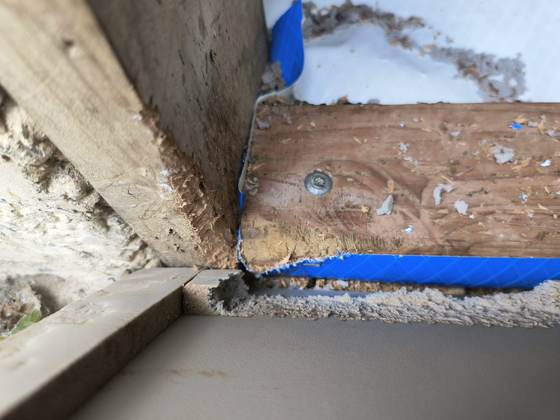
Rodents. The dominant multifamily problem here. Norway rats in crawlspaces and at foundation level; roof rats using the roofline, the branches and the utility runs. The route into the building is almost always the same short list: the crawlspace vent with a corroded screen, the gap where siding meets the foundation, the utility penetration nobody closed, the door sweep that has worn through. From there, in a building with continuous wall cavities, they have the run of the place.
Cockroaches, which are a shared-building problem in a way they are not in a detached house. They move through plumbing chases and shared walls, and a kitchen or bathroom stack connects units vertically as reliably as a corridor connects them horizontally. Which species it is changes the work: an indoor population breeding in warm kitchen and bathroom voids is a building-wide baiting job that has to include the neighbors, while a larger, slower roach coming up from a damp crawlspace or a floor drain is a moisture and exclusion problem that baiting alone will not settle. Identifying which one is on the glue board before quoting is the difference between a program that ends it and a program that repeats. UC IPM separates the species that live and breed indoors from the ones that come up out of drains and damp ground, and states that identifying which is present decides the control method.
Bed bugs, the highest-stakes problem in multifamily and the one most often under-scoped. See below.
Ants, mostly odorous house ants, which is the ant most buildings here actually have. Worth knowing because it is the species where a repellent spray causes the colony to bud — fragmenting and relocating rather than dying — so a well-meaning tenant with a hardware-store bottle converts one nest into several inside a shared wall.
Wasps in soffits, balconies and shared entries, which in a multifamily setting is an access and liability problem rather than a nuisance one.
Overwintering insects on sunlit walls in autumn, which generate a lot of complaints and very little actual risk.
Bed bugs, and why scope discipline matters
Bed bug work in a shared building is the clearest case of the general rule, and the most expensive one to get wrong.
A single unit treated in isolation, in a building with continuous voids and adjoining walls, is close to guaranteed to recur — either because the population had already spread before anyone reported it, or because it moves during the treatment. The correct scope is nearly always the reporting unit plus the adjoining units on all six sides, inspected before quoting rather than after.
The other half is process rather than treatment. Bed bugs travel with belongings and with people, so turnover is the highest-risk moment in the year for a student building — furniture arriving from unknown sources, items left behind and reused, and a compressed window in which everything moves at once.
Bed bug verification carries a fee, which is credited against treatment if you proceed. It is the one service on this site that is not a free visit, and the reason is that verification in a shared building is genuine diagnostic work across multiple units rather than a look at one mattress.
For tenants and managers, the practical detail worth circulating before turnover is simple: do not take upholstered furniture off a curb, and do not move belongings into a unit that has not been checked.
Turnover is the window
If there is one operational point on this page worth acting on, it is this one.
A multifamily building can be treated while occupied indefinitely and never actually be fixed, because the work that fixes it needs empty rooms. Exclusion inside a unit, sealing at penetrations, work on the floor and wall assemblies, proper attention to a kitchen or bathroom chase — none of that happens comfortably around a tenant’s belongings and none of it happens at all if access is negotiated one door at a time.
Turnover solves that, and in Bellingham the turnover window is short and every trade in the county wants it. Which means it has to be booked early and planned against, rather than treated as a period when things happen to be quiet.
What belongs in a turnover window:
- Unit-level exclusion at penetrations, thresholds and any assembly opened during works
- Bed bug inspection of vacated units before anything is moved in
- Crawlspace and attic work where those are shared
- Common area and waste area work that is disruptive when occupied
- Anything requiring the building to be quiet
The rest of the year is program and response. The year’s actual progress is made in those few weeks.
Common areas, waste, and the parts nobody feels responsible for
In a house, everything belongs to somebody who lives there. In a multifamily building there is a category of space that belongs to everyone, which in practice means it belongs to nobody, and a disproportionate share of the population lives in it.
Waste handling is the first and largest of them. A dumpster enclosure for thirty units generates far more than thirty times the pressure of a single household bin, because volume, moisture and continuous availability are all present at once. Where the enclosure is, whether the gates close, whether the ground around it can be washed, and how often it is emptied through summer will do more for the building than anything applied to it. On several buildings we work, the entire rodent picture is a waste enclosure thirty feet from a foundation.
Shared crawlspaces and attics are the routes that connect everything. On an older converted building these are frequently continuous across units that have otherwise been carefully separated, so a population under one apartment has access to the floor of all of them. They are also where nobody goes, which is why a problem there is usually months old by the time it is reported upstairs.
Laundry rooms, mail rooms and storage lockers. Warm, plumbed, full of soft material, and used by everybody at odd hours. Storage lockers in particular accumulate exactly what a rodent wants — cardboard, textiles, and food somebody forgot they had put there.
Entries, stairwells and balconies, which are where wasp nests turn up and where a nest becomes a liability question rather than a nuisance one.
Landscaping held against the building. Shrubs against siding, bark mulch piled to the foundation line, and irrigation keeping ground damp are all standard in managed landscaping and all work against the building. This is the easiest thing on the list to change and the one most often defended on appearance grounds.
Talking to residents, and why it decides the outcome
A multifamily program succeeds or fails on communication more than on technique, and it is the part most often left to whoever happens to be on site.
Three things reliably matter:
Notice that arrives early enough to be acted on. Preparation for a treatment — clearing under a sink, emptying a closet, being home — takes a resident time they have to be given. Notice pinned up the day before produces a building where half the units are not ready, which turns a scoped job into a partial one and a partial job into a recurrence.
A route for reporting that does not embarrass anybody. Under-reporting is the norm in shared housing, particularly for cockroaches and bed bugs, because residents reasonably fear being blamed or charged. A building where problems are reported late is a building where problems are large. Whatever the reporting route is, it works better when it is framed as maintenance rather than as fault.
Plain guidance at turnover. The single highest-value message in a student building is a short one: do not take upholstered furniture off a curb, and do not move belongings into a unit that has not been checked. We will supply that material for managers to circulate, because it prevents more bed bug work than any treatment we perform.
We are not the ones who should be writing your resident communications, but we will tell you which findings need to reach residents and when, and we will put them in the record so a manager is not reconstructing them from memory.
HOAs and community associations
Community associations are a related account with a different decision structure, and the difference is worth planning around.
The pest work is largely the same — shared structures, common landscaping, waste handling, and a set of individually owned homes the association does not control the inside of. What changes is that decisions are made by a board on a meeting cycle, budgets are set annually, and the association’s authority over an individual owner is narrower than a landlord’s over a tenant.
Practically that means two things. Structural recommendations need to arrive in a form a board can act on — scoped, costed, and separated into what is common property and what belongs to an owner — rather than as a note to a manager. And timing has to respect the budget cycle, because work proposed in the wrong month waits a year regardless of merit.
The most common conversation we have with associations is about landscaping and about waste enclosure siting, both of which are common property, both of which drive the population, and both of which are far cheaper to change than to treat around indefinitely.
The record, and the three-way split
Multifamily is the account type where documentation earns its place fastest, because there are three parties and each of them has a different question.

The owner wants to know whether the building’s condition is being addressed or merely managed, and what the capital items are.
The manager wants to know what happened, what was recommended, and what they need to chase.
The tenant wants to know that their complaint was acted on.
Every visit produces a dated record: what was found, in which unit or common area, what was done, and — the part that resolves most disputes — whether the cause was structural or housekeeping. That distinction is not about assigning blame. It is about routing the work, because a structural finding goes to the owner’s maintenance list and a housekeeping finding goes to the tenant, and a program that does not separate them sends everything to whoever answered the phone.
We are not the people to advise you on your lease or on landlord-tenant law. We are the people who can make sure the argument is not about what happened.
Bellingham’s rental registration and inspection program is worth planning against here. It puts a periodic inspection with a checklist on the building, and pest access points are on that checklist — foundation openings, screens, gaps at penetrations. The practical effect is that exclusion stops being discretionary maintenance and becomes a compliance item with a date. A landlord sealing a crawlspace ahead of it is buying two things at once.
The year in a rental building
Late winter to spring. Structural work while nothing else competes for it. Rodent activity is high and visible, which makes it the best diagnostic period of the year.
Spring. Ants, and the annual arrival of tenant-applied sprays that make the odorous house ant problem worse. Worth getting ahead of with a note to residents.
Summer. Wasps in soffits, balconies and entries, building to the heaviest weeks in August and September. Lower rodent pressure indoors.
Turnover. The working window described above.
Autumn. Rain displaces the outdoor rodent population and the first cold snap drives it inside; overwintering insects arrive on sunlit walls at the same time. This is when the complaints spike, and it is far too late to prevent what caused them.
Where we work
Multifamily and property management work is concentrated in Bellingham — Sehome, Happy Valley, the Lettered Streets, City Center, Cordata and Barkley — and runs out through Ferndale, Lynden, Blaine and Birch Bay, and south into Mount Vernon, Burlington and Sedro-Woolley. Single buildings, portfolios and HOA-managed communities are all the same category of work.
Starting
We walk the building, not a unit. That walk covers the crawlspace and attic where they are shared, the common areas, waste handling, the exterior envelope, and enough units to understand the construction rather than to inventory the complaints.
What comes back is a written program: buildings and areas in scope, the exclusion items separated into what is being done now and what is a capital item, visit frequency, common area treatment, the turnover plan, and how findings are routed between owner, manager and tenant. Then we run it and revise it as the building changes.
There is no long-term contract requirement. For a walk, or a straight answer about whether a scope somebody else has quoted is the right one, call or text.
Frequently asked questions
Can you treat just the one unit that complained?
We can, and on most problems it is the wrong scope. Rodents, cockroaches and bed bugs all move through shared walls, plumbing chases and utility runs, so treating one apartment while the neighbors are untouched moves the population rather than removing it and produces a second call four weeks later. We will tell you what the correct scope is and let you decide, rather than quoting the small version and returning.
How does the Bellingham rental registration and inspection program affect us?
It puts a periodic inspection on the building with a checklist, and pest access points are on it — foundation openings, screens, gaps around penetrations. The practical effect is that exclusion work stops being optional maintenance and becomes a compliance item with a date attached. A landlord who seals the crawlspace is buying two things at once, and it is worth timing that work against the inspection cycle rather than after it.
Who is responsible, us or the tenant?
Legally that depends on your lease and on state landlord-tenant law, and we are not the people to advise you on it. What we can do is remove the argument about facts: every visit produces a dated record of what was found, where, and what caused it, separating structural items from housekeeping ones. Most disputes we are asked into are disputes about what happened rather than about who pays.
What is the best time to do the real work in a student building?
Turnover. Units are empty, access is unrestricted, walls and floors are visible, and nobody's belongings are in the way. In Bellingham that window is short and everybody in the trades wants it, so it books early. A building that only ever gets worked on while occupied will always be treated rather than fixed.
Do you handle bed bugs in multifamily?
Yes, and it is the one problem where scope discipline matters most, because a single unit treated in isolation is close to guaranteed to recur. Bed bug work carries a verification fee that is credited against treatment if you proceed, and in a shared building we will want to inspect adjoining units before quoting rather than after.
How is a multifamily program priced?
From the walk, by structure rather than by door count alone. The variables are the number of buildings, the construction type and how connected the voids are, common areas and waste handling, whether there is an active problem to resolve before a program starts, and how much of the exclusion work is being done up front.
This is one of the programs described on our commercial pest control page, which covers how a program is built, what the record looks like, and the compliance surface it contributes to. For a site walk, call or text 360-410-2199.
Commercial pest control in Whatcom County?
Family-owned, no long-term contracts, and every treatment is backed by our 100% Service Guarantee.
Most calls in Whatcom County are out within 1–2 days, about 3 during the late-summer peak.
Last updated