
Healthcare & Senior Living Pest Control
These buildings run continuously and hold people who cannot easily move away from a problem, so the program is built on exclusion, monitoring and containment rather than on application. Every visit is documented, findings are escalated the same day, and the work is scheduled to be invisible to residents and patients.
Call 360-410-2199 Request a free inspection
What gets checked, at a glance
| Visit records | Dated per visit: what turned up and where, what was done, what was advised and to whom, each device's state |
|---|---|
| Device map | Numbered consistently with the visit record, clear to a person who does not know the building |
| Also on file | Licenses, product labels and safety documentation for anything applied |
| Escalation | Interior findings go to the named contact on shift the same day |
| Visit timing | Around meal service, shift changes, therapy and clinical schedules, not through them |
| Devices | Out of reach of residents, visitors and pets, and out of sight from corridors |
| Bed bug reports | Reporting room and adjoining rooms checked before quoting; verification fee credited toward treatment |
| Facility's side | Admission checks on furniture and belongings, drains on a documented cleaning program, notice of building works |
Buildings that never close, holding people who cannot leave
Two facts shape every program in this category, and everything else follows from them.
The building never closes. There is no shutdown, no empty week, no after-hours in the sense a restaurant has one. Whatever gets done is done around people who are living or being treated in the building at the time.
The occupants cannot easily move away from a problem. A resident in memory care, a patient in a treatment room, somebody in a bed they cannot get out of without help — none of them can leave the room while something is dealt with, and none of them chose the situation.
That combination pushes the whole program toward the same answer: close the building, monitor it closely enough to find things early, contain what is found, and reserve anything else for the narrow set of situations that genuinely require it. That ordering — thresholds, monitoring, prevention, and the least risky control before any broadcast application — is how the EPA defines integrated pest management. It is the approach we would argue for anyway. Here it is not optional.
The categories inside one heading
“Healthcare” covers buildings with very little in common, and the pest picture differs enough to be worth separating.
Clinics, medical and dental offices. Predictable hours, a kitchen or break room that behaves like a small office kitchen, clinical waste on its own stream, and a public waiting area with food coming in constantly. Structurally straightforward, and the reputational exposure is high relative to the pest pressure.
Veterinary practices and boarding. Animal food, animal waste, bedding, and kennels that are warm and continuously occupied. Genuinely higher pest pressure than human healthcare, and a narrower toolbox because of the animals.
Assisted living and independent living. Effectively multifamily housing with a commercial kitchen attached and a care obligation on top. Shared walls, shared voids, individual apartments with individual housekeeping, and a dining operation feeding everyone.
Memory care. The same as above with two differences that matter: residents may not be able to report a problem, and may not be able to leave a room. Both push the program further toward containment and exclusion.
Skilled nursing. Clinical, continuous, heavily inspected, and the most documentation-dependent of the group. It is also the setting where a single finding in the wrong room carries the most weight, which is why the monitoring density is higher and the escalation route shorter than anywhere else we work.
A single operator may run several of these in one building, which is why the program is scoped by area rather than by site.
What actually turns up
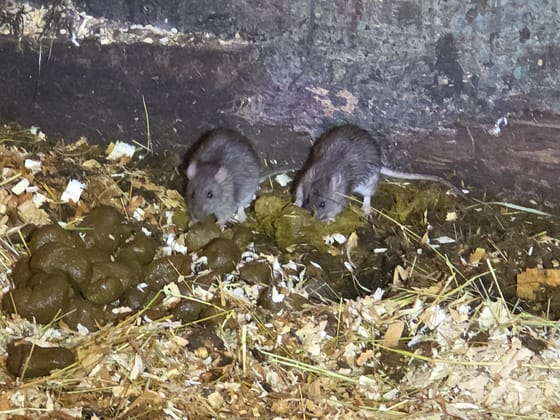
Rodents, and inside Bellingham that means rats — Norway rats at ground level using foundations, drains and service voids, roof rats where roofline access exists. Facilities out toward Lynden, Everson and the rural districts see more mice, off surrounding open ground. The routes are structural and predictable: loading and kitchen doors, utility penetrations, roof plant, and the ceiling and service voids that connect wings.
Cockroaches, mostly German, arriving in cardboard and deliveries and establishing in kitchen and laundry voids. In a connected building they travel through plumbing chases exactly as they do in an apartment block.
Small flies from drains and organic film — kitchen, dish area, laundry, sluice rooms and mop stores. As everywhere, the adults are not the problem.
Ants, predominantly odorous house ants, drawn to break rooms, resident kitchenettes and anywhere food is stored in small amounts in many places.
Bed bugs, which are the highest-stakes item in senior living and are dealt with below.
Overwintering insects on sunlit walls in autumn, which generate complaints disproportionate to any risk.
Bed bugs in senior living
This is the problem most likely to become a public one, and the handling matters more than the treatment.
Scope by building, not by room. A room treated in isolation, in a building with connected voids and adjoining walls, is likely to recur — either because the population had already spread or because it moves during the work. The correct scope is the reporting room plus the adjoining rooms on all sides, inspected before quoting.
They arrive with belongings and with people. Admissions, returns from hospital, visiting family, and furniture brought from home are the routes. A facility that inspects incoming furniture and belongings at admission prevents more infestations than any treatment schedule.
Reporting culture decides the size of the problem. A resident who fears being blamed, moved or charged will not report early, and late reports are large infestations. Whatever the policy is, it works better framed as maintenance than as fault. That is a facility decision rather than a pest control one, and we will say so plainly because it does more good than anything we apply.
Dignity is part of the job. These are people’s homes. Work is scheduled with staff, discussed with the resident where they are able to take part, and done without an audience.
Bed bug verification carries a fee, credited against treatment if the facility proceeds. In a connected building that verification is genuine diagnostic work across several rooms rather than a look at one mattress.
The kitchen, laundry and sluice
The service areas carry most of the actual pest pressure, and they run harder than their equivalents elsewhere.
The kitchen is a commercial kitchen feeding a captive population three times a day, every day, with no closed period. Receiving, dry storage, dish area, drains and waste behave exactly as they do in food service, and the same three things decide it: drains, deliveries and the back door.
Laundry is warm, damp, full of soft material and continuously occupied by linen. Lint accumulation behind and beneath machines is both harborage and a maintenance issue.
Sluice and soiled utility rooms are drain-and-film environments and produce small fly complaints that are almost always solved by cleaning rather than treatment.
Waste handling, which in a facility is higher volume, includes clinical streams on separate schedules, and sits at a loading area that is also the building’s weakest structural point.
Veterinary and boarding, which is its own problem
Veterinary practices and boarding kennels sit under this heading and behave unlike the rest of it, so they are worth separating.
The pressure is genuinely higher. Animal feed, animal waste, bedding, and warm kennel runs occupied around the clock make a building that supports a population far more readily than a clinic does. Rodent pressure in particular tends to be constant rather than seasonal.
The toolbox is narrower. Animals are present, often confined, frequently unwell, and several species are far more sensitive than people to things that would be unremarkable elsewhere. Rodenticide in particular has to be treated as a last resort and, where used at all, contained and placed where no animal can reach it or reach something that has. Secondary exposure — an animal reaching a rodent rather than the bait — is the risk people forget.
That pushes veterinary work almost entirely onto exclusion, sanitation and mechanical control, which is slower and more structural and is the only honest approach in a building full of patients.
Food storage is the center of it, exactly as it is on a farm. Bagged feed off the floor and in hard containers, spillage cleared on a schedule somebody owns, and the storeroom sealed as tightly as the building allows.
Flies are a welfare issue rather than a nuisance one, particularly around kennels, runs and waste. As everywhere, they are won at the breeding site — the bedding, the run drainage and the waste store — rather than on the adults.
Construction, renovation and the reopened envelope
Healthcare buildings are almost permanently under some form of works, and every project reopens the envelope.
A wall opened for a cable run, a ceiling grid lifted for ductwork, a new door cut into an elevation, a roof plant replaced — each of those is a hole in a building that was sealed, made by a contractor whose job is not pest exclusion and who will not think to close it in a way that holds.
Two things follow. Works should be notified to the program rather than discovered on the next visit, because a gap open for three months during a project is how a population establishes in a building that had none. And the end of a project is the right moment to check the envelope, while access is still easy and somebody is still on site who can fix what is found.
Dust and disturbance also move existing populations. A renovation in one wing routinely produces sightings in the wing next door, which look like a new problem and are usually an old one relocating. Knowing that in advance saves a great deal of alarm.
Working invisibly
Discretion here is not about appearances, it is about not adding to what residents and patients are already dealing with.
Vehicles and technicians stay unobtrusive. Visits are scheduled around meal service, shift changes, therapy and clinical schedules rather than around our route. Placements go where residents, visitors and pets cannot reach them and where they cannot be seen from a corridor. Mechanical control carries more of the load than it does elsewhere, because it introduces nothing.
Where something cannot be done without disturbing an area, it is planned with the facility rather than sprung on it — including telling you when the honest answer is that a room needs to be vacant for an hour.
Courtyards, gardens and where residents actually sit
The outdoor spaces at a senior living site are used more heavily than the equivalent at any other kind of building, and they generate work that is easy to overlook because it is nobody’s department.
Stinging insects are the clearest safety issue on the property. August and September are the heaviest weeks of our year, which is exactly when courtyards and patios are in constant use. A nest in a patio umbrella, a heater housing, a handrail void or the eave above a garden door is a different order of risk when the people beneath it move slowly, may not see it, and may not be able to get away from it quickly. These are calls we prioritize out of order and we would rather be called about a suspicion than about a sting.
Bird feeders and resident gardens. Both are genuinely good for residents and both are food sources at the wall of the building. This is one of the few places we will suggest a compromise rather than a removal — moving a feeder well away from the elevation, and choosing seed that produces less spillage, keeps the thing residents value without feeding a rodent population against the foundation.
Landscaping held against the building. Shrubs against siding, deep bark mulch to the foundation line, and irrigation keeping ground permanently damp are standard in managed landscaping and all work against the envelope. Pulling planting back from the wall is cheap and it is resisted on appearance grounds more often than on cost.
Smoking areas and the ground around them, which accumulate litter and are usually adjacent to a door that gets propped.
Staff, and the part that changes the outcome
More than in any other setting, the result here tracks a small number of things staff do, and staff turnover means those have to be said again periodically rather than once.
- Report a sighting rather than assuming somebody else has, and report it the same shift
- Do not prop external doors, particularly the loading and kitchen doors in warm weather
- Break down and remove cardboard rather than stacking it in a corridor or a store
- Check incoming furniture and belongings at admission, which prevents more bed bug work than any treatment
- Keep the mop store, the sluice and the laundry lint traps clean, because those are breeding sites rather than housekeeping details
- Tell us about building works, because a contractor has just opened the envelope
None of this is complicated and all of it is forgettable, which is why we will brief a team in ten minutes when it is useful rather than assume it was covered at induction.
The record
Facilities are inspected and surveyed by more parties than most operators outside the sector expect, and the pest program is a small but reliably requested part of it.
Every visit produces a dated record: what was found and where, what was done, what was recommended and to whom, and the state of every monitoring device. Where devices are in use, a map somebody unfamiliar with the building can follow, numbered consistently with the record. Licenses, product labels and safety documentation for anything applied.
Across a year that becomes a trend, which is what a surveyor is actually reading — not whether there was ever a finding, but whether findings were acted on and whether the same one keeps recurring in the same place.
We are not your surveyor and a pest program does not guarantee any inspection outcome. It removes one common reason for a poor one and demonstrates a managed system.
The year
Late winter to spring. The structural window such as it is. Exclusion at the loading area, kitchen doors, utility penetrations and roof plant, planned around a building that cannot be closed.
Spring. Ants appear in break rooms and resident kitchenettes. Small fly pressure rises with temperature.
Summer. Fly pressure at its peak, waste volume up, doors propped in warm weather. Stinging insects build toward the heaviest weeks in August and September, and around a facility they are an access and safety problem at entries, patios and courtyards where residents sit.
Autumn. Rain displaces the outdoor rodent population and the first sustained cold decides where it goes. A continuously heated building with a loading door is the best address available. This is when the year’s exclusion work proves itself.
What we ask of the facility
- A named contact per shift who can escalate a finding the same day
- Access to kitchen, laundry, sluice, storage and mechanical areas on visit days
- Receiving and admissions standards for incoming goods, furniture and belongings
- Waste pickup frequent enough for the warm months, and enclosures whose gates and lids shut
- Drains on a documented cleaning program
- A reporting route for residents and staff that does not feel like blame
- Notice of building works, because a contractor opening a wall reopens the envelope
Where we work
Facility work runs across Bellingham and out through Ferndale, Lynden, Blaine, Birch Bay and Sudden Valley, then south into Mount Vernon, Burlington and Sedro-Woolley. Clinics, dental and veterinary practices, assisted and independent living, memory care and skilled nursing are all the same category of work at different intensities.
Starting
We walk the building with somebody who knows the estate and somebody who knows the kitchen, and on a residential facility ideally somebody who knows the care operation as well. The walk covers receiving and loading, kitchen and dry storage, laundry and sluice, waste, mechanical and service voids, resident or clinical areas as far as is appropriate, and the exterior envelope.
What comes back is a written program: areas in scope, what is sealed and what is monitored, device map and numbering, visit frequency and timing against the building’s rhythm, escalation route for interior findings, the reporting package, and the housekeeping and receiving items that will decide the result.
There is no long-term contract requirement. For a walk, call or text.
Frequently asked questions
Can you work in occupied resident rooms?
Yes, and how it is done matters more than what is used. Room work is scheduled with staff, coordinated around the resident rather than around our route, and leans on inspection, containment and mechanical control. Anything applied is matched to an occupied healthcare setting and to the label. Where a room cannot be treated safely while occupied, we say so and work with the facility on the alternative.
How do you handle a bed bug report in assisted living?
Quickly, quietly and with the adjoining rooms inspected before anything is quoted. In a building of connected rooms a single unit treated alone is likely to recur. The other half is dignity: a resident who reports early makes the problem smaller, and a culture where reporting feels like blame produces late reports and large infestations.
Are you insured and licensed for this kind of facility?
We carry Washington State Department of Agriculture licenses with the PCO Structural and PCO General categories, and general liability insurance. The license numbers are published on our about page so a facility can verify them with WSDA directly rather than take our word for it. Facilities that need a certificate of insurance naming them should ask at the quote.
What documentation will we have if we are inspected?
A dated record of every visit — findings, actions, recommendations and who they went to — plus a device map somebody unfamiliar with the building can follow, and the label and safety documentation for anything used. On a facility account the record is a substantial part of what is being bought rather than paperwork around the service.
Do you work around meal service and shift changes?
Always. Kitchens are worked outside meal service, resident areas outside the busiest hours, and clinical areas around the schedule rather than through it. On a facility that runs continuously there is no quiet day, so the program is built into the rhythm rather than fitted around it.
How is a facility program priced?
From the walk, by area rather than by square footage alone. The variables are the number of distinct areas — kitchen, laundry, clinical, resident, storage, mechanical — the state of the envelope and the loading area, monitoring density, visit frequency, and how much reporting the facility needs.
This is one of the programs described on our commercial pest control page, which covers how a program is built, what the record looks like, and the compliance surface it contributes to. For a site walk, call or text 360-410-2199.
Commercial pest control in Whatcom County?
Family-owned, no long-term contracts, and every treatment is backed by our 100% Service Guarantee.
Most calls in Whatcom County are out within 1–2 days, about 3 during the late-summer peak.
Last updated