
Dairy & Livestock Pest Control in Whatcom County
On a dairy the pest problem is a feed problem. Rodents live on spilled grain and supplement, and no amount of treatment outpaces an open feed room. We seal the buildings that can be sealed, defend the ones that cannot, and work fly pressure at the breeding sites rather than on the adults.
Call 360-410-2199 Request a free inspection
What gets checked, at a glance
| Visit records | Dated each visit: what was found, what was done, device locations and contents, and advice for the farm's side |
|---|---|
| Device map | Provided wherever devices are in use, readable by somebody who has never walked the farm |
| Visit timing | Set around milking, feed delivery and scrape times, usually as a fixed window, not a fixed day |
| Visit frequency | What the farm actually needs, agreed after the walk and stated in the written program |
| Devices | Structural voids and locked stations that livestock and product cannot reach |
| Sealed or defended | Milk house, shop, offices and control rooms get closed; pole barns get a monitored perimeter |
| Farm's side | Feed spillage cleared on a schedule someone owns, bagged product off the floor, a named report recipient |
The feed room decides everything
Every dairy pest program in this county is a feed program wearing a different name. That is not a simplification for the sake of a first paragraph — it is the thing that decides whether the work holds.
A rodent population is limited by food, water and harborage. On a farm, water is free and harborage is everywhere, so food is the only one of the three anybody can move. And a feed room with grain, pellets or supplement in open storage, with the inevitable spillage under the auger and around the base of the bins, is an unlimited food supply. It will support a population indefinitely, and it will rebuild that population faster than any treatment schedule can knock it down.
We have walked farms where a great deal of money had been spent on a monthly service, the technician was diligent, the devices were placed correctly, and the population had not moved in two years. The reason was forty feet away, under a feed bin, in a pile of spilled ration that nobody had swept because sweeping it was not anybody’s job.
So the first conversation on a dairy is rarely about products. It is about where the feed is, what it sits in, what happens to what falls on the floor, and which of those things can change.
What is actually different about a working farm
Residential pest control is a building problem. Agricultural pest control is a system problem, and the building is one part of it.
The buildings are not sealable and pretending otherwise is dishonest. A pole barn on a gravel pad with roll-up doors that stand open through the working day cannot be closed against rodents. Neither can a free-stall barn. Quoting a farm as though the envelope can be made tight is how a customer ends up paying for a result nobody could have delivered, and it is the single most common thing we are called in to replace.
The pressure comes from outside and it is continuous. Field margins, ditch banks, hedgerows, manure storage, silage faces and neighboring ground all produce rodents. A farm is not defending against an occasional intrusion; it is sitting inside the population’s range permanently.
There are animals and product in the way. Every decision about where something is placed and what is used has to account for livestock, feed, milk and the people handling all three. That constrains the toolbox in ways a restaurant does not.
The clock is not yours. Milking, feeding and scraping happen on a schedule that does not move, and a program that ignores it will be canceled inside six months no matter how good the technical work is.
Somebody is going to audit it. Processor requirements, herd health protocols, and the documentation that goes with them mean the record of what was done is part of the deliverable rather than an administrative afterthought.
Where the rodents actually are
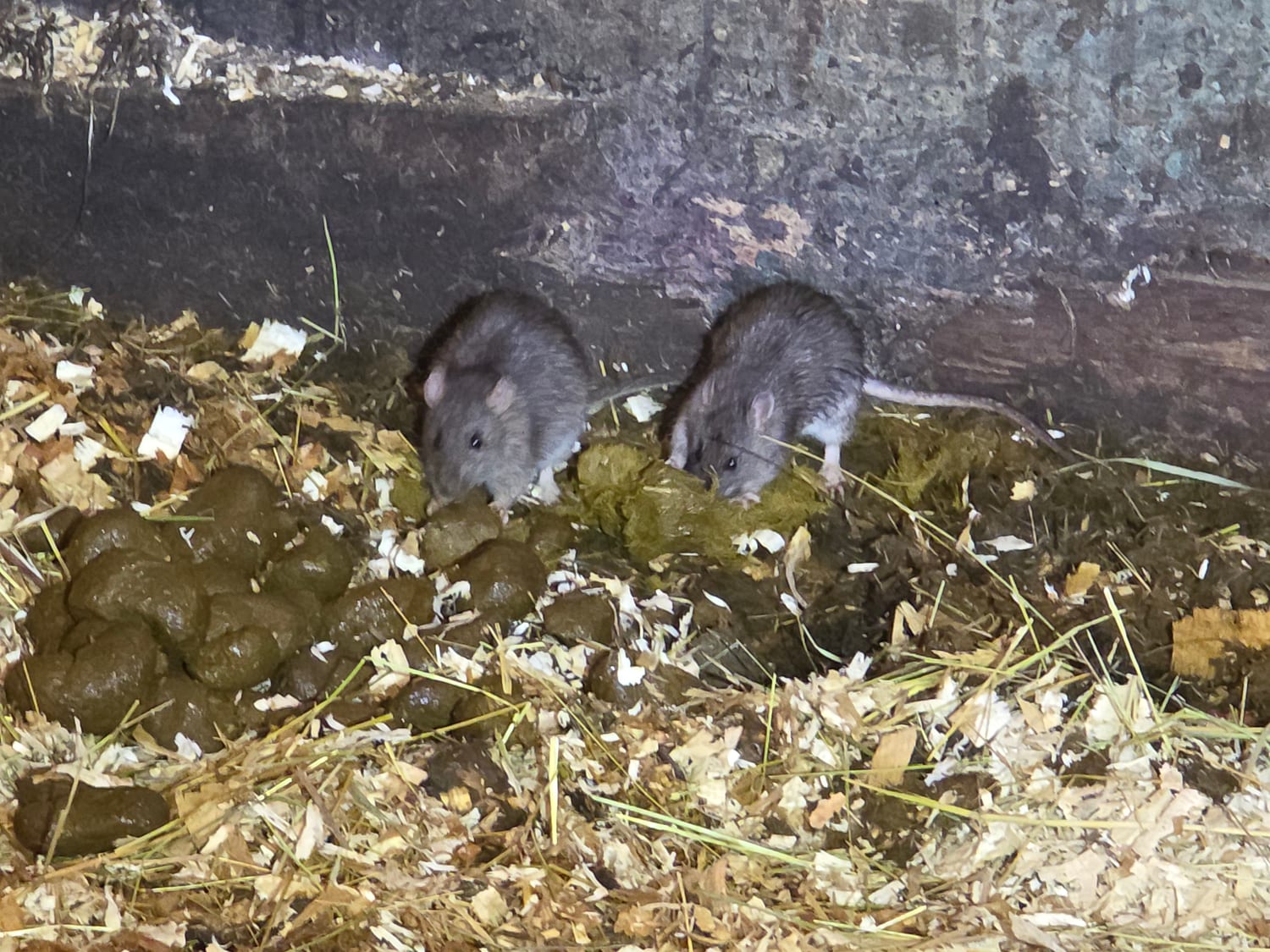
The mouse pressure in this part of the county is heavier than most farm owners expect, and heavier than it is inside the city. Bellingham is largely a rat picture. Out through Lynden, Everson, Nooksack and Sumas it is mice first, in volume, because the surrounding ground is field and hedgerow and there is no edge to push them back from. Deer mice come in off that ground alongside house mice, and they arrive in numbers rather than singly.
That changes the work. A rat problem is usually a small number of animals using a small number of routes, and closing the routes ends it. A mouse problem on a farm is a continuous supply, and the goal shifts from elimination to a defended core: the feed room, the shop, the milk house, the electrical, the offices.
The feed room and feed storage. The center of it, always. Bulk bins, supplement, mineral, bagged product, and every square foot of floor under and around them.
The shop and equipment storage. Wiring is the expensive one. A rodent-chewed harness on a tractor or a mixer is a repair bill and a day lost in the middle of whatever season it happens in, and it happens because the shop is warm, dry, quiet at night and full of soft material.
Electrical panels and control rooms. Small, warm, undisturbed and full of places to nest. Also the place where a failure is worst.
The milk house and anywhere product is handled. Different standard entirely, and the one that gets the most attention from anyone inspecting.
Calf housing and hutches. Milk replacer, warmth, bedding, and young stock that cannot move away from a problem.
Around chicken coops, on any property that has them. Backyard poultry is common on smallholdings out here and it is a reliable rodent magnet — not the birds, the feed. The spillage under a feeder and the coop floor together make a heated, covered, food-filled structure sitting in open ground. It is worth treating as its own small feed room.
What we do about it
Close what closes. The milk house, the shop, the feed room where its construction allows, the offices, the control rooms. Hardware cloth at the right gauge, sheet metal where something will be chewed at directly, and proper patching at masonry gaps — not foam, which a rodent opens in an evening and which has a legitimate role only as a backer behind something they cannot chew.
Defend what does not close. For the pole barns and the open structures, the work is a monitored perimeter, controlled placements in structural voids where livestock and product cannot reach them, and attention to the margins that are feeding the population — the vegetation held against a wall, the pallet stack against the outside of the shop, the equipment parked in the same spot for two years.
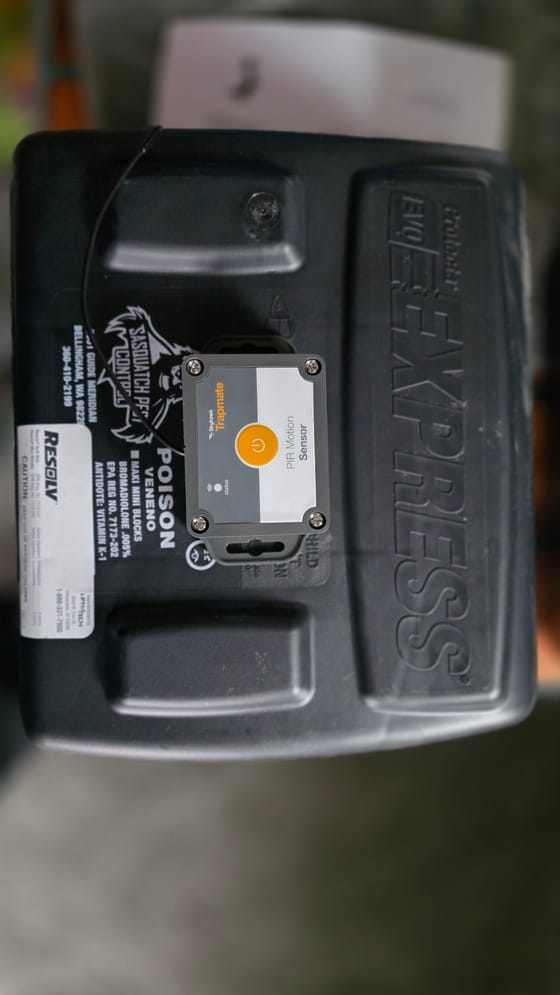
Deal with the population that is already there. Trapping and, where it is appropriate to the setting and the label, targeted rodenticide placement in structural voids and locked stations. This is the part that is visible, and it is the part that does the least good on its own.
Write down what we found and what we did. Every visit. See the record section below, because on a farm this is not paperwork, it is the thing that gets produced when somebody asks.
Rats, where they do turn up
The section above is about mice because mice are the volume problem out here, but Norway rats are the ones that do the structural damage when a farm has them, and they concentrate differently.
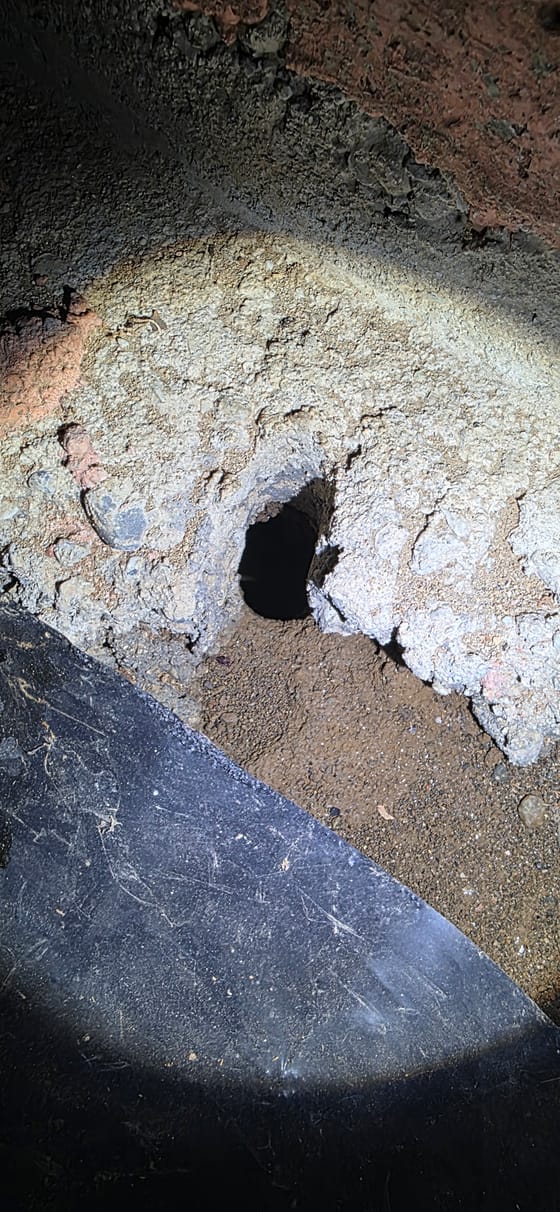
Rats want a burrow in workable ground near a reliable food and water source, so on a livestock operation they are found along manure storage, at lagoon margins, under concrete slabs and feed pads where a void has opened, in the banks of ditches running the property, and beneath any structure with a gap between the slab and the ground. They are not spread across the farm the way mice are — they are in a handful of places, in numbers, and those places are usually visible once somebody knows to look at the ground rather than at the buildings.
That difference is useful, because a rat problem is more tractable than a mouse problem. A small number of burrow systems supporting a population can be dealt with directly, and closing the slab voids and the structural gaps they are using does more than any amount of work above ground. The tell is burrow entrances with worn, greasy runs between them, and fresh spoil at the mouth of a hole that somebody filled in last month.
What the program asks of you
Every farm program has items on the customer’s side, and we would rather set them out at the quote than raise them as excuses at month four. Typically:
- Feed spillage cleared on a schedule somebody owns, rather than when it is noticed
- Bagged product off the floor and, where possible, in hard containers
- A scrape and bedding routine that does not leave wet organic material sitting
- Vegetation and stored material pulled back from the walls of the buildings we are defending
- Access to the buildings in scope on the visit day, including the shop and any locked control rooms
- Somebody named who receives the report and can act on the recommendations
None of these are unusual and most farms are already doing several. They are listed because a program where they do not happen will underperform, and the honest time to say so is before the first invoice rather than after the third.
Flies, which are won at the breeding site
Fly control on livestock operations is the clearest example of a problem that cannot be treated at the point where it is noticed.
Adult flies are the symptom. They are also the only part anybody sees, which is why the reflex is to spray them and why spraying them never holds. A house fly goes from egg to adult in about a week in warm weather, and the population you knocked down on Tuesday is replaced from the breeding sites by the following Tuesday. Treating adults on a farm is a maintenance task at best and a way of spending money at worst.
The breeding sites are moist organic material, and on a dairy that means:
- Manure that sits rather than moving — under equipment, in corners the scraper misses, behind gates, around the base of posts
- Wet bedding, particularly where it has been pushed aside and forgotten
- Silage faces and spoiled feed at the edge of a bunker
- Spilled feed that has taken up moisture
- The margins of lagoons and any standing water that stays for more than a few days
- Calf hutches and the ground under them
The work is finding those, and then changing the ones that can be changed — scrape frequency, drainage, where bedding is stacked, how quickly spoiled feed is dealt with. Where a site cannot be removed, larvicide applied to it is worth more than any amount of adult knockdown, because it works on the supply rather than on the output.
We will also be direct about what is not achievable. A working dairy in July will have flies. The goal is a manageable population that does not affect the animals or the people, not a fly-free barn, and anybody promising the second one is selling you a visit schedule.
Other things that turn up
Cluster flies, which are not a livestock issue at all but arrive every autumn on south and west walls and work into the buildings through the same gaps everything else uses. They are an overwintering nuisance rather than a health matter, and the treatment is exterior and seasonal.
Stored product insects in grain and bagged feed — beetles and moths that arrive inside the product rather than through a door. Worth knowing because the response is inspection of incoming stock and stock rotation, not perimeter work.
Wasps and hornets, which on a farm are mostly an access and safety problem: nests in equipment sheds, in the eaves over a working door, inside a piece of machinery that has stood still for a month. UC IPM’s note on yellowjackets and other social wasps describes both halves of that — nests in wall and ceiling voids and under eaves, and defensive behavior rising as the season goes on. August and September are the weeks for it.
Birds in open buildings are a real problem on some sites, but bird work is not something we take on; we will say so and point you to a specialist. The feed spillage that draws them draws rodents as well, and that part is ours.
The record, which is part of the job here
On residential work the documentation is a courtesy. On an agricultural account it is half of what is being bought.

What a program produces is a dated record of every visit: what was found, what was done about it, where the devices are and what was in them, and what was recommended on your side. That last one matters more than it sounds. When a recommendation about feed storage or scrape frequency exists in writing and dated, it is evidence of a managed system. When it was mentioned to somebody in a yard in March, it is nothing.
A device map is part of it wherever devices are in use, drawn so that somebody who has never been on the farm can follow it. That is the single most common thing an auditor asks for and the single most common thing a cheap program cannot produce.
We are not your auditor and we will not tell you a pest program guarantees an audit result. It does not. What it does is remove one of the standard reasons for failing one, and produce the history that shows the system was being managed rather than reacted to.
The year on a Whatcom County farm
Late winter into spring. The quiet-looking part of the year and one of the most useful. This is when the exclusion work on the sealable buildings actually gets done, because the weather allows it and nothing else is competing for the time. It is also when a rodent population that moved in over the autumn is most visible, because the evidence has been accumulating in a shop nobody has been in.
Spring. Fly breeding starts as temperatures come up and moisture is everywhere. Getting ahead of it here is worth more than anything done in July. Rodent activity is still high from the winter.
Summer. Fly pressure at its peak, and the season where a program either holds or is exposed. Wasp and hornet work builds through it. Rodents are largely outdoors and living well, which is exactly why this is the window to close buildings.
August and September. Our heaviest weeks across the whole business, driven by stinging insects, and the last practical window for exterior sealing before the weather closes it.
Autumn. The rain saturates the ground and displaces the outdoor rodent population, and then the first genuinely cold snap decides where it ends up. On a farm the answer is the feed room, the shop and the calf housing. Cluster flies arrive on the walls at the same time.
Where we work
Dairy and livestock work is concentrated where the farms are: Lynden, Everson, Nooksack and Sumas, out along the Nooksack valley, and south through Custer and the open country toward Bow and Alger. We also work smallholdings and hobby operations across the county, which have the same feed problem at a smaller scale and usually less of the equipment that makes it manageable.
If your operation is outside the areas listed on our service areas page, say so on the first call and we will tell you honestly whether we run that route rather than booking it and disappointing you.
Starting
We walk the farm first, and on anything larger than a hobby operation that walk takes a while, because most of what matters is not where the activity is — it is where the feed is and where the access is. Bring whoever knows the feeding and scraping routine, because half the answers are in that.
What comes back is a written program: the buildings in scope, what is sealed and what is defended, the visit frequency, what happens on each visit, the device map, and the items on your side that will decide the outcome. Then we run it and adjust it when the farm tells us to.
There is no long-term contract requirement. Programs on working farms are recurring because the pressure is recurring, not because the agreement traps anybody.
Frequently asked questions
Can you actually rodent-proof a pole barn?
No, and anybody who says otherwise has not looked at one. A pole building with a gravel floor and a roll-up door was never going to be sealed. What we quote instead is protection for the things that matter inside it — the feed room, the shop, the wiring, the panel — and a monitored program around the buildings that can genuinely be closed.
Will treatment interfere with milk production or the herd?
It should not, and the way that is guaranteed is by keeping product out of animal areas rather than by choosing a gentler product. Placements go in structural voids, feed rooms are handled mechanically and by exclusion wherever possible, and anything applied is matched to the setting and the label. If a job cannot be done without risk to livestock or milk, we will say so.
Why are the flies worse some years than others?
Because fly numbers track breeding sites and moisture rather than the weather alone. A wet spring that leaves manure and bedding damp longer, a bunker that is not sealing, or a changed scrape schedule will each produce a bad fly year on a farm that did nothing differently otherwise. That is also why treating adults on their own never holds.
Do you work around milking and feeding schedules?
Yes, and it is usually the first thing we ask. A dairy runs on a clock that does not move for us, so visits are built around milking, feed delivery and scrape times. On most farms that means a fixed window rather than a fixed day, and we would rather agree that at the start than turn up in the middle of a milking.
Is a rodent problem a biosecurity problem?
It is treated as one by every audit and herd health protocol we have seen, and for good reason — rodents move between manure, feed and housing, and they do it nightly. We are not veterinarians and will not make a herd health claim, but the reason to close a feed room is not tidiness.
What does a program cost on a working farm?
It is quoted from the walk, because two dairies a mile apart can need entirely different work. The variables are how many buildings are in scope, how much of the feed storage can be closed, whether there is an active population to knock down first, and the visit frequency the site actually needs. There is no long-term contract requirement.
This is one of the programs described on our commercial pest control page, which covers how a program is built, what the record looks like, and the compliance surface it contributes to. For a site walk, call or text 360-410-2199.
Commercial pest control in Whatcom County?
Family-owned, no long-term contracts, and every treatment is backed by our 100% Service Guarantee.
Most calls in Whatcom County are out within 1–2 days, about 3 during the late-summer peak.
Last updated