The Commercial Property Manager's Winter Pest Checklist for Whatcom County
Call 360-410-2199 Request a free inspection
Winter in Whatcom County isn’t a break from pest pressure — it’s a shift in which pests are active and where they concentrate. Between November and March, commercial properties face rodents seeking warmth, stored-product pests thriving in dry goods, overwintering insects looking for harborage, and the ongoing need to document pest activity for compliance. This checklist gives property managers, facility directors, and business owners a systematic framework covering the exterior, interior, food and storage areas, and the documentation that protects your operation.
Why is winter pest pressure different for commercial properties?
Commercial facilities attract pests for reasons homes don’t: high delivery volumes, heavy foot traffic, large food storage areas, complex building systems, and often 24-hour operations that supply heat and food around the clock. A pest sighting by a customer, patient, student, or health inspector carries consequences far beyond discomfort. In winter specifically:
- Rodents: House mice and Norway rats are the dominant concern. Cold outdoor temperatures drive them toward heated buildings, with food storage, loading docks, and mechanical rooms as prime targets.
- Cockroaches: German cockroaches in commercial kitchens are indifferent to outdoor temperatures and live in warm, food-rich spaces year-round.
- Stored-product pests: Indian meal moths, grain beetles, and weevils infest dry goods. Winter is peak season for discovering infestations that developed quietly in fall.
- Overwintering insects: Stink bugs, cluster flies, and boxelder bugs shelter in walls and attics, emerging on warm days to create nuisance issues.
What should be on your exterior checklist?
Start outside, where most pests find their way in.
Foundation and lower walls
- Walk the full foundation perimeter looking for cracks and gaps — any opening larger than about a quarter inch is a potential mouse entry point
- Check all utility penetrations (electrical conduit, plumbing, gas, HVAC lines) for unprotected gaps
- Examine the base of exterior doors — a quarter-inch gap under a door is enough for a mouse
- Look for rodent burrowing near the foundation, and check dumpster enclosures and grease trap areas
Loading docks and delivery areas
- Check dock door seals for gaps, cracks, or deterioration — dock doors are the highest-risk rodent entry point in most facilities
- Check dock leveler pits, an enclosed space rodents frequently use
- Check vehicle dock seals and bumpers, and look for droppings, gnaw marks, or grease trails in staging areas
Roofline and upper structure
- Check roof vents, exhaust fans, and HVAC penetrations for gaps and missing screens
- Check soffit vents for damaged or missing screens — a common rodent entry point
- Look for nesting material in roofline gaps, clear clogged gutters, and check for tree branches contacting the roofline
Exterior sanitation
- Keep dumpsters at least 15 feet from building entries where possible, with lids closed and functioning
- Clear accumulated debris, pallets, and stored materials from the perimeter, and remove standing water
What should be on your interior checklist?
Move inside to the areas where pests concentrate once they’re in.
Mechanical and utility rooms
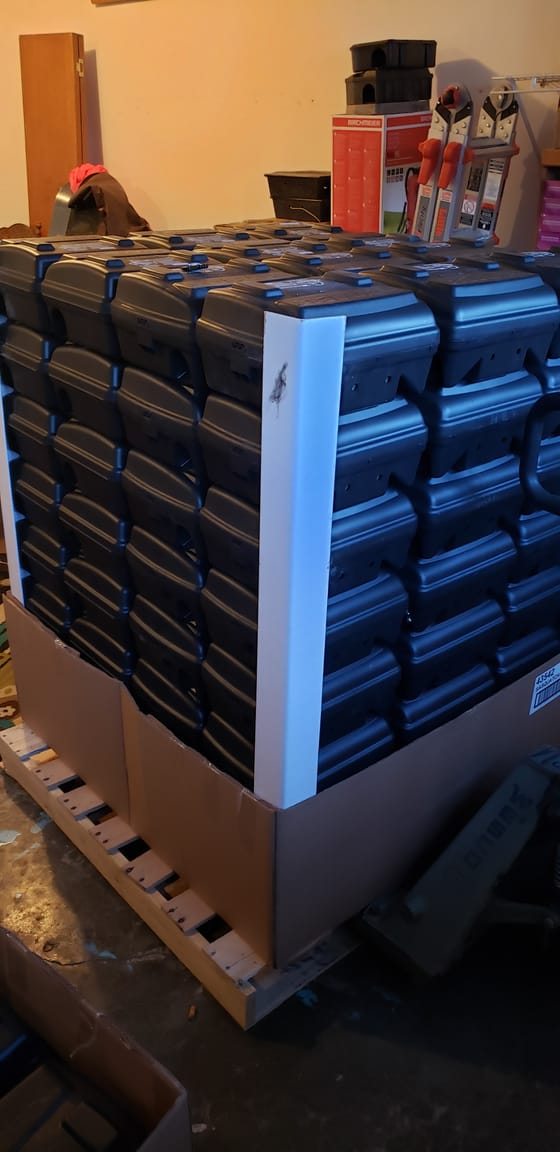
- Check around all pipe and conduit penetrations through interior walls
- Check around water heaters, boilers, and HVAC equipment — warm areas attract rodents
- Look for droppings, gnaw marks, or nesting material, confirm monitoring devices are in place and being checked, and check electrical panels for signs of gnawing
Receiving and storage areas
- Check incoming deliveries before they enter — cardboard and pallets frequently harbor cockroaches and stored-product pests
- Check dry goods for webbing, frass, damaged packaging, and larvae, and keep all food in sealed containers or original packaging
- Watch for moisture in storage areas and check under shelving, where rodents run along walls
Food preparation and service areas
- Check under and behind all cooking equipment for cockroach harborage and rodent activity
- Check refrigerator and freezer motor housings — warm, dark, prime cockroach nesting areas
- Check floor drain covers, equipment gaps, wall voids, grease trap access points, and walk-in cooler and freezer door seals
Break rooms and restrooms
- Check under sinks and around plumbing for cockroach harborage and moisture
- Check behind appliances, keep break room food sealed, and check restroom plumbing penetrations
What are the winter concerns for specific industries?
Different facility types face different pressures and service frequencies.
- Restaurants and food service: German cockroaches in kitchen equipment plus rodents in storage. Monthly minimum, bi-weekly for higher volume, with service records and corrective action logs for health department compliance.
- Grocery and retail food stores: Stored-product pests in dry goods and rodents in back-of-house. Pull shelving to audit for Indian meal moth webbing and increase dock door checks. Monthly minimum.
- Warehouses and distribution: Rodents in palletized goods and dock-related entry. Keep dock doors closed except during active loading. Quarterly for low-activity sites, monthly for food-adjacent.
- Healthcare and senior living: Rodents and cockroaches near dietary kitchens and patient dining — any activity in patient areas is a serious compliance event. Monthly minimum, bi-weekly in kitchens.
- Schools and childcare: Rodents and cockroaches in cafeteria and kitchen areas. Check after winter break, since empty buildings can hide activity. Monthly during the school year.
How should you handle documentation and compliance?
For facilities under health department, WSDA, or other oversight, documentation is both a compliance requirement and a liability protection tool.
What to document: the date and scope of every service visit; pest activity observed by species, location, and quantity; corrective actions and who took them; monitoring station locations and results; complaints and resolutions; and exclusion work performed.
Who needs it: Restaurants and food service typically keep 12 months of records for county health department compliance. FDA-regulated food facilities need it under the Food Safety Modernization Act. Healthcare facilities need it for accreditation and state licensing. Schools and childcare need it under Washington State’s Healthy Schools Act IPM rules. The school piece is spelled out by Washington’s Department of Health: a written pest control policy, notice to interested parents before an indoor or outdoor application, posting at the treated area, and records kept afterward.
Sasquatch commercial service includes written records of the service performed on each visit, suitable for regulatory documentation, along with monitoring station mapping and records, corrective action documentation, exclusion work, and no long-term contracts.
What is the monthly walk-through protocol?
Between professional visits, designate a staff member to walk the property monthly, document what they see, and report it before the next visit.
- Exterior: Check dock doors, dumpster areas, and the foundation perimeter for new gaps or activity
- Receiving: Look for droppings, gnaw marks, or damaged packaging in staging and dry goods storage
- Kitchen and food prep: Check under and behind equipment for cockroach frass, droppings, or egg cases
- Mechanical rooms: Visually check monitoring stations and look for new gnaw marks or droppings
- Common areas: Check break rooms and restrooms for under-sink activity and food storage violations
- Document everything — pattern recognition over time is a valuable early warning system
Common questions
What pests are most common in Whatcom County commercial buildings in winter?
Rodents — house mice and Norway rats — are the dominant winter concern, drawn to heated structures with food access. German cockroaches remain active in commercial kitchens year-round regardless of outdoor temperatures. Stored-product pests like Indian meal moths, grain beetles, and weevils peak in dry goods storage in late fall and winter, and overwintering insects such as stink bugs and cluster flies emerge inside on warm days.
Are commercial pest control requirements different from residential in Washington State?
Yes, significantly. Food service, food storage, healthcare, and childcare facilities are subject to oversight from the Washington State Department of Agriculture, county health departments, and in some cases the FDA. Infestations can result in inspection failures, closure orders, and liability. Washington’s Healthy Schools Act imposes specific IPM requirements on school districts, and commercial programs must include documentation, monitoring records, and corrective action tracking that can be produced during an inspection.
How often should a commercial property in Bellingham schedule pest control?
It depends on facility type and risk. Food service operations typically need monthly service at minimum, with bi-weekly visits for higher-volume operations. Grocery and retail food stores generally need monthly service. Offices and retail without food service can often be managed with quarterly service plus monthly monitoring checks. Healthcare and senior care need monthly service in kitchen and patient-adjacent areas. We recommend frequency based on your actual risk profile, not a one-size-fits-all schedule.
What should property managers look for during a winter walkthrough?
Focus on evidence of rodent activity — droppings, gnaw marks, grease marks, nesting material — near food storage, loading docks, and mechanical areas; new gaps around utility penetrations and dock doors; moisture near HVAC equipment and under sinks; stored-product pest signs in dry goods; cockroach evidence behind and under kitchen equipment; and any conditions that have changed since the last check. New deliveries, construction, or building-use changes are often when pests find footholds.
Does Sasquatch Pest Control offer commercial pest control in Whatcom County?
Yes. Sasquatch provides commercial pest control throughout Bellingham, Ferndale, Lynden, Blaine, and the rest of Whatcom County, as well as Burlington, Mount Vernon, and Sedro-Woolley in neighboring Skagit County. We serve restaurants, food service, warehouses, retail, healthcare, schools, and other commercial facilities, with written records of the service performed after every visit, monitoring records, and exclusion work as needed. No long-term contracts required.
What industries in Whatcom County most need winter pest control?
Restaurants and food service face the highest risk and strictest requirements — activity can trigger a health department closure. Grocery and retail food stores have significant dry goods and delivery vulnerability, warehouses face rodent pressure at docks and in palletized storage, and healthcare and senior living require zero pest tolerance. Schools face Healthy Schools Act rules and winter-break vulnerability, and agricultural processing operations face some of the strictest documentation requirements in the region.
Originally published on our previous website at
/commercial-winter-pest-checklist-whatcom/. Brought across August 31, 2026, with the text
left as it was written apart from corrections to anything that is no longer
accurate.
Related posts
- What Pests Are Common in Bellingham, WA? A Complete Seasonal Guide
- Defending Lynden Homes: The Power of Pest Control Services
- Why You Shouldn't Remove a Wasp Nest Yourself in Bellingham (And What We Do Instead)
- Earwigs, Millipedes, and Clover Mites: The Weird Invaders Showing Up in Bellingham Homes
- Eco-Friendly Pest Control in Bellingham: What It Actually Means
- Eco-Friendly Pest Control in Bellingham: Keeping Your Home Safe for Kids and Pets
Pest problem in Whatcom County?
Family-owned, no long-term contracts, and every treatment is backed by our 100% Service Guarantee.
Most calls in Whatcom County are out within 1–2 days, about 3 during the late-summer peak.
Last updated