
Wood-Boring Beetles: A Silent Threat to Your Home
Call 360-410-2199 Request a free inspection
When people think of wood-destroying pests, termites usually come to mind first. But there’s another group of insects that can be just as destructive — wood-boring beetles. These pests tunnel deep into wooden structures, causing damage that often goes unnoticed until it is extensive. At Sasquatch Pest Control we treat these hidden problems before they compromise the wood in your home.
Types of wood-boring beetles
Wood-boring beetles fall into three broad groups — powderpost beetles, round-headed borers, and flat-headed borers — drawn from five scientific families:
- Lyctidae (true powderpost beetles) — prefer hardwoods, especially newer lumber. Their presence is often signaled by fine powder-like frass and tiny exit holes (0.8–1.6 mm in diameter).
- Bostrichidae (false powderpost beetles) — primarily attack hardwoods but may infest softwoods. Their damage includes tunnels across the wood grain and frass that tends to clump together.
- Anobiidae (furniture or deathwatch beetles) — infest both hardwood and softwood, including seasoned wood. They leave small, pellet-filled frass and exit holes 1.6–3.0 mm in diameter.
- Cerambycidae (longhorned beetles, including the old house borer) — target softwoods. They create extensive tunnels within wood and leave exit holes 6–10 mm in diameter.
- Buprestidae (metallic wood-boring beetles) — prefer unseasoned wood and do not reinfest. Their exit holes range from 2–10 mm in diameter and their tunnels are packed with sawdust-like frass.
Which of these actually turn up in Whatcom County?
Most articles on this subject list all five families as though they were equally likely anywhere in the country. They aren’t, and for a Bellingham home the picture narrows considerably.
Anobiid beetles are the ones that matter here. They infest damp softwood, which describes the Douglas fir and hemlock framing, joists, and subfloor in most homes in this county, and they need wood with an elevated moisture content. The Forest Products Laboratory puts that at around 15% moisture content or higher for a viable infestation, and says better ventilation is what brings a building back below it. That is why they show up in poorly ventilated crawl spaces and under leaking bathrooms rather than in dry, conditioned parts of a house. Like nearly every wood problem in this climate, an anobiid infestation is a water problem underneath.
True powderpost beetles (Lyctidae) need hardwood. They attack the sapwood of oak, ash, hickory, and similar species, so they turn up in hardwood flooring, trim, furniture, and imported wood products — not in structural framing lumber. Correctly identifying which family you have is the difference between a sensible treatment and a pointless one.
The old house borer is essentially an eastern pest and is not established in western Washington, despite appearing in every national article on the subject.
The golden buprestid is a genuine Pacific Northwest curiosity worth knowing about. Its larvae can develop inside structural lumber for many years — sometimes a decade or more — before adults chew their way out, leaving an oval exit hole in finished woodwork. Alarming to find, but buprestids do not reinfest seasoned wood in a building, so an emergence usually means the insect was in the lumber before the house was built and the story ends there.
Signs of infestation
Wood-boring beetles can go undetected for years. Common signs include:
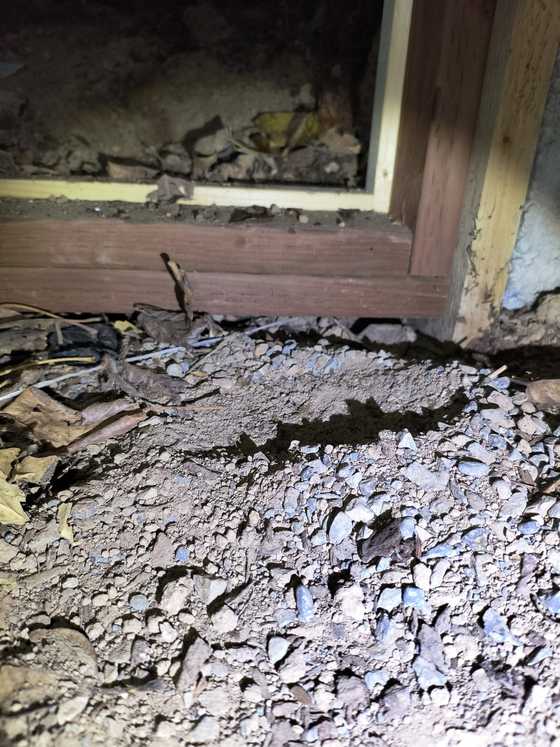
- Tiny, round or oval exit holes in wood surfaces
- Fine sawdust-like frass accumulating below the affected areas
- Weak or crumbling wood, especially in structural beams and furniture
- Audible clicking or tapping sounds from larvae feeding inside the wood
The life cycle of wood-boring beetles
The real damage caused by these beetles occurs in the larval stage. After eggs are laid on or in the wood, the larvae hatch and burrow deep inside, feeding on the starches and other organic materials within. Depending on the species and environmental conditions, the larvae can take months or even years to mature before emerging as adults. Once they exit the wood, they mate, lay eggs, and the cycle begins again.
How to prevent and control wood-boring beetles
Prevention tips
- Use seasoned and treated wood in construction projects.
- Seal exposed wood surfaces with varnish, polyurethane, or paint to prevent egg-laying.
- Store firewood outside and bring it indoors only when you’re ready to use it.
- Maintain proper ventilation in crawl spaces, attics, and basements to reduce moisture. In this climate this is the single most useful thing you can do, since the beetle that matters here needs damp wood.
Non-chemical control methods
- Heat treatment. Bringing the wood’s core temperature to roughly 133°F (56°C) and holding it there for at least 30 minutes is the standard used for heat-treating lumber and kills all life stages. Surface temperature is not the same as core temperature — the middle of the timber is what has to get there.
- Freezing. For smaller infested furniture pieces, several days in a freezer can work.
Chemical treatment options
If an infestation is extensive, chemical treatment may be warranted:
- Insecticidal sprays and borate treatments — applied to unfinished wood surfaces to kill emerging adults and reduce the chance of reinfestation. Borates need bare, unfinished wood to penetrate, which is why they suit new construction and exposed crawl space framing.
- Injectable treatments — target existing exit holes and cracks to reach hidden larvae.
- Fumigation — for severe, whole-structure infestations, fumigation may be the only option. It is a specialized job requiring a separately licensed fumigation contractor, and it is not something we perform.
Call Sasquatch Pest Control
Wood-boring beetles are not a problem to ignore. If you suspect your home or furniture is affected, we’ll come out and take a look, identify what you’re dealing with, and explain what treatment would involve. You get a written record of any treatment we perform and a clear plan for follow-up. Pricing depends on the property and the scope of the work, and we quote it after a visit. No contracts, no scare tactics, and no hidden fees.
Originally published on our previous website at
/wood-boring-beetles-a-silent-threat-to-your-home/. Brought across August 31, 2026, with the text
left as it was written apart from corrections to anything that is no longer
accurate.
Related posts
- Yellow Jackets: How Sasquatch Pest Control Can Help
- How Apartments and Rentals Should Handle Spring Pest Outbreaks in Bellingham
- Bed Bug Bites and Infestations: Understanding and Treating the Threat
- Can You Bring Bed Bugs Home for the Holidays? Travel Tips for Whatcom County Residents
- Bees vs Wasps vs Hornets: How to Tell What's Buzzing Around Your Bellingham Home
- Are Black Spiders in Washington State Dangerous? What You Need to Know
Pest problem in Whatcom County?
Family-owned, no long-term contracts, and every treatment is backed by our 100% Service Guarantee.
Most calls in Whatcom County are out within 1–2 days, about 3 during the late-summer peak.
Last updated