
Soft Wood Around a Window Sill
Wood that gives under a probe around a window sill is decay, and decay is a water problem. Insects may or may not be involved, and the question that matters first is how far the softness extends, because that decides whether this is a repair or a repaint.
Call 360-410-2199 Request a free inspection
What to do, in order
- Push a blunt screwdriver or awl into the sill at several points, including both ends, the underside and the trim below, and mark where it gives
- Probe a spot you know is sound so you can feel what firm timber should be like
- Look for the water: cracked sealant, missing head flashing, a flat sill, no drip edge, or a gutter, downspout or sprinkler above
- If the softness is on the inside of an aluminum-framed window, suspect condensation and say so when you call
- Do not fill and repaint wood that a probe sinks into; it traps the moisture and hides how far the decay goes
- Call for a free visit to see whether carpenter ants, moisture ants, dampwood termites or beetles are in the sill; treating them is our part
- Leave cutting out and replacing the decayed wood to a carpenter, with the water entry fixed at the same time
What a soft sill is telling you
Somebody goes to repaint a window, or cleans a sill, or leans on one, and the wood gives. Sometimes paint has bubbled. Sometimes a screwdriver goes in with almost no resistance and comes out with damp fibrous material on it.
That is decay, and decay in a building is always a water story.
Wood does not soften on its own. It softens because decay fungi have colonized it, and those fungi need the wood genuinely wet — the USDA Forest Products Laboratory puts serious decay at moisture content above the fiber saturation point, which averages around thirty percent. The number worth remembering is the safe one rather than the dangerous one: wood held below about twenty percent is not at risk, which is why every practical remedy on this page is about keeping timber dry rather than about killing anything.
So the finding is really three findings at once. There is water getting somewhere it should not. It has been there long enough for decay to establish, which is generally years rather than months. And the timber involved has lost strength it will not get back.
Whether an insect is also present is a genuine question, and it is the third question rather than the first.
The probe test, done properly
This is the most useful thing a homeowner can do before anybody comes out, and it costs nothing.
Take something blunt and reasonably rigid — a flat screwdriver, an awl, a sturdy skewer. Not a knife blade, which cuts rather than probes and gives a misleading result.
Push it into the wood with firm steady hand pressure. Do not hammer it.
Sound timber resists. The tip makes an impression and stops. You can feel it refusing.
Early decay allows the tool in a few millimeters with more give than it should have, and the surface may feel spongy.
Advanced decay lets the tool sink in with little resistance, often an inch or more, and what comes out on the tip is soft, stringy or crumbly.
Test at several points, not one: the middle of the sill, both ends where it returns into the jamb, the underside if you can reach it, the bottom corners of the frame, and the trim and siding immediately below the sill. Then test somewhere you believe is sound, to calibrate what resistance should feel like.
Mark where it is soft. The pattern tells us as much as the depth.
Where the water is getting in
At a window opening, the list is short and the same defects recur across the county’s housing.
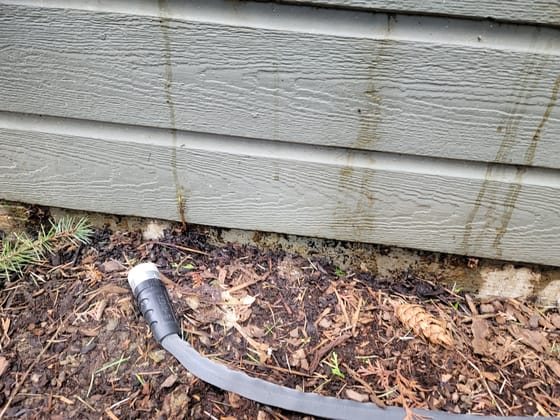
Failed sealant. The bead around the frame hardens, cracks and pulls away. This is the most common single cause and the cheapest to correct once the damage is repaired.
Missing or failed head flashing. The metal or membrane above the opening that directs water out over the trim. On a lot of older construction it was never installed at all, and water simply runs down behind.
A sill without slope. Sills are supposed to shed water outward. Where one was built flat, has settled flat, or has been built up with paint layers, water sits on it and works into the end grain.
No drip edge. Without one, water running off a sill wraps back underneath by surface tension and into the framing below.
Failed glazing seals, letting water into the frame from the glass side.
Paint film breakdown. Paint is a moisture barrier only while it is intact. Once it cracks it becomes a moisture trap, holding water against the wood rather than letting it dry.
Something above. An overflowing gutter, a downspout discharging near the wall, a sprinkler head hitting the siding, or a roof detail sending water down that elevation.
Interior condensation. Particularly on older aluminum-framed windows, where winter condensation runs off the metal onto the timber below. No exterior leak exists at all, and people are frequently surprised by this one.
Which insects, and what they mean
Once wood is wet and softening, it becomes habitable for several things, and each leaves a distinct signature.
Carpenter ants. The most common in a window frame here. They excavate galleries to nest in rather than eating the wood, leaving smooth chambers and pushing out coarse fibrous debris that contains insect body parts. What is in your frame is usually a satellite nest, with the main colony outdoors in a stump, a log or a woodpile.
Moisture ants. Small and yellowish, occupying wood that is properly wet rather than merely damp. They build a distinctive spongy carton material from chewed wood and soil. They are a strong indicator of a serious water problem and are less structurally aggressive than carpenter ants.
Dampwood termites. Larger, requiring high moisture content, and cutting galleries across the grain as well as along it. Their galleries tend to be packed with dark material rather than swept clean, and they produce hard six-sided pellets. Treating wood-destroying organisms is within our licensed categories, and where a finding has been identified we handle that side of it.
Wood-boring beetles. Fine floury powder and small round exit holes. Often historic and often not requiring treatment at all, depending on species and moisture.
Nothing. Genuinely common, and worth saying. A substantial share of soft sills are decay alone. In that case there is no pest treatment to sell and the job belongs entirely to a carpenter and whoever fixes the water.
How far it goes
This is the question people most want answered and the one that most often surprises them.
Water that gets past a sill runs down. It follows the framing, and it wets whatever is below before it evaporates or drains. So visible softness at a sill is frequently the top of a taller column of damage rather than the whole of it.
The members typically involved, in order as you go down: the sill itself, the sill horns and the lower ends of the jambs, the rough framing under the opening, the cripple studs below it, the sheathing behind the trim, and — where the run has been long and the window is on a lower floor — the bottom plate and even the rim joist.
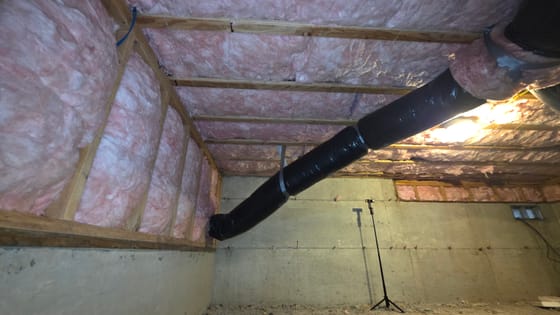
None of that is visible without opening something up, which is a carpenter’s work rather than ours. What we can do is probe everything accessible, look at the wall from inside where there is access, check the crawlspace or basement below that elevation, and give you an informed view of how far to expect the repair to extend once it is opened.
The honest position is that nobody knows precisely until the trim comes off. What we can tell you is whether the evidence suggests a sill and trim job or something larger, and that distinction is worth having before you take quotes.
Why filler and paint make it worse
The instinct to fill and repaint is strong, and it is worth explaining why it is usually the wrong move.
Decayed wood has lost structural material. Filling the void does not restore it; it puts a rigid material into soft surroundings, where it will eventually work loose because the wood around it continues to fail.
Paint over decayed timber seals moisture in. Wood that could previously dry between rain events now cannot, and the moisture content stays above the threshold that keeps the fungi active. The decay continues under a smooth surface, which is why the same sill fails again in two years looking worse.
And the cosmetic repair removes the evidence. The soft area that told you where the water was is now hidden, and the next person to look at it — a buyer’s inspector, a contractor, you in three years — finds a much larger problem with no warning signs.
Filler has a legitimate place: small superficial defects, nail holes, minor weathering, in timber that is otherwise sound under a probe. It is not a repair for wood that a screwdriver sinks into.
What a real repair looks like
For reference, since it will be somebody else doing it.
The affected timber is cut out back to sound material — not sanded, not filled, cut back — and replaced with new stock, preferably a durable species or appropriately treated material.
The water entry is corrected at the same time: flashing installed or repaired, sealant renewed properly, a drip edge added, slope restored to the sill.
New timber going into a location with a history is worth borate-treating before it is closed up. It is inexpensive at that stage and effective for a long time.
Finish is applied to all faces including the back and the end grain before installation, because end grain is where water enters timber fastest and it is the surface most often left bare.
And whatever was causing the water from above — the gutter, the downspout, the sprinkler, the roof detail — gets dealt with, or the new sill starts the same clock.
The signs that come before softness
Decay announces itself for a while before a probe confirms it, and knowing the early signals lets people catch this at the cheap stage.
Paint failing in one specific area. Not general weathering across an elevation, but blistering, cracking or peeling concentrated at a sill, a bottom corner or a joint. Paint fails where the substrate is wet, so a localized failure is a localized moisture problem.
Staining. Dark streaks or patches on the sill or the trim below it, often running downward from a joint or a corner.
A joint that has opened. Where two pieces of trim meet, or where the sill meets the jamb, a gap appearing means movement, and movement in exterior joinery usually means moisture cycling.
Discoloration of the wood itself where it is exposed — gray, brown or unusually dark patches, sometimes with a slightly velvety look.
Fasteners weeping rust stains, which indicates persistent moisture around them.
Cubical cracking. Later-stage brown rot breaks wood into small rectangular blocks across and along the grain. If you can see that pattern, the timber is well past salvageable.
Fungal growth, from a white stringy mat to visible fruiting bodies. Less common on an exterior sill than in a crawlspace, and unmistakable when present.
Condensation on the interior, pooling on the sill on cold mornings.
Any one of those in isolation is worth a probe test on a dry afternoon. It takes five minutes and the difference between catching this at paint-blistering and catching it at soft-under-a-screwdriver is often several thousand dollars.
Which windows in which houses
The building stock in this county fails in patterns, and knowing yours helps predict what you will find.
Pre-war and early post-war wood windows. Old-growth material, dense and naturally durable, in single-glazed frames with putty glazing. They last remarkably well, but the putty and the paint film need maintaining, and where that lapsed for a couple of decades the bottom rails and sills are where it shows. The good news is that the timber itself is usually worth repairing rather than replacing.
Mid-century aluminum in wood surrounds. The condensation case described below. Often no exterior defect at all, and the damage on the inside.
1970s and 1980s softwood. Faster-grown, less durable material, frequently in frames that have had several coats of paint over failing substrate. These fail more readily than the older stock.
Replacement units in original openings. A very common and frequently troublesome situation. Where a new window was fitted without correcting the flashing and the sill detail behind it, the visible unit is modern and sound while the original framing continues to get wet. People spend money replacing a window that was not the problem, then find the same softness returning below the new one.
Newer construction. Generally better detailed, with its own failure mode where housewrap, flashing tape and sealant meet at the head and jambs. When those fail the water is inside a well-sealed assembly that cannot dry, which can produce faster damage than an older, breathable wall.
The condensation cases
Worth a separate note because they are commonly misdiagnosed and the repair is different.
On older aluminum-framed windows, and on some steel-framed ones, the frame conducts cold straight through. In a Whatcom County winter that produces condensation on the interior face of the metal, which runs down and collects on the timber sill below. Over years it produces exactly the same soft sill as an exterior leak.
The tell is that the damage is on the interior side and the exterior detailing looks intact. Also common: mold or staining on the interior sill and the lower part of the frame, and moisture visible on the metal on cold mornings.
The remedy is not sealant. It is reducing indoor humidity — extract fans that actually discharge outside, crawlspace vapor barrier, ventilation — and, in the longer run, replacing or improving the window assembly.
If your problem is on the inside, say so when you call. It changes the whole diagnosis.
When it comes up in a sale
Soft exterior joinery is one of the most frequently flagged items in a property transaction here, and it produces a predictable sequence.
A buyer’s inspector probes the sills, finds movement, and writes it up. The report notes decay and, where insects are present, notes those too. What follows is usually a request for repair and, where a wood-destroying organism has been identified, a treatment.
Those are two different trades. The repair is a carpenter’s. The treatment of a wood-destroying organism is within what we are licensed to carry out, and we handle that part.
The formal document a transaction may call for is not something we issue, and we are not structural pest inspectors. That work belongs to a separately licensed professional, and we will point you to one rather than blur the boundary to keep a job.
For sellers, the practical advice is unglamorous and reliable: soft sills do not improve while a property is listed, they photograph badly, and they invite a larger concession than the repair would have cost. Dealing with them before listing, in your own time and with your own choice of contractor, is nearly always cheaper than negotiating over them.
For buyers, the useful question to ask is not whether there is decay but how far it goes. A sill and trim replacement is a modest job. The same finding with a compromised bottom plate behind it is a different conversation, and nobody can tell you which you have until something is opened.
Keeping the next one from happening
Once a sill has been repaired properly, the maintenance that keeps it sound is modest and almost nobody does it.
Walk the exterior joinery once a year on a dry day, ideally in late summer. Look at every sill, every bottom corner, every joint, and the trim below each opening. Probe anywhere the paint is failing.
Renew sealant before it fails rather than after. It has a working life measured in years, not decades, and replacing a bead costs a fraction of replacing a sill.
Keep the paint film intact, particularly on horizontal surfaces and end grain, which are where water enters fastest. A sill that is repainted every few years rarely fails.
Keep gutters clear and downspouts discharging well away from walls. A remarkable share of window decay is really a gutter problem that nobody connected to the window six feet below it.
Cut back vegetation touching the wall. A shrub against siding keeps that elevation from ever drying.
Check where sprinklers land. Irrigation hitting a wall daily through a summer does more damage than the rain does.
And on any window that has already been repaired once, put a note in a calendar to look at it again in two years. Locations that failed once tend to be the locations that were always going to.
What we will do
We will probe the sill and everything around it, work out where the water is coming from, check whether anything is living in the timber, and look at the structure below that elevation because the answer is frequently further down than the finding.
You get a plain account: what is soft and how far, whether an insect is involved and which, where the water is entering, what needs replacing rather than filling, and which trade should be doing which part.
Where there is a wood-destroying organism to treat, that is our work and we will quote it. Where the finding is decay alone, we will tell you that and hand the job to a carpenter without charging you for the conversation.
Assessment is free, there is no term agreement, and we would rather be the people who told you the sill needed replacing than the ones who sold you a treatment for a leak.
Frequently asked questions
How do I test how bad it is?
Push something blunt into the wood at several points — a screwdriver or an awl, firmly but without hammering. Sound timber resists and barely marks. Softened wood gives. Wood that lets the tool sink in has lost its strength and will not recover.
Is it always insects?
No. A great many soft sills are decay alone, with no insect involved at all. Where insects are present they arrived because the wood was already wet and softening, which is why the water is the first question either way.
Can it just be filled and painted?
Filler on decayed wood hides the problem and traps the moisture. It is reasonable on a small superficial defect in otherwise sound timber. It is not a repair for wood that a probe sinks into, and painting over it makes it worse.
What is behind the sill I cannot see?
Usually the framing under and beside the opening, and often the wall structure below it. Water that got past a sill runs down, so the visible softness is generally the top of a taller area of damage rather than all of it.
Which insects would be in there?
Carpenter ants in wood that is damp, moisture ants and dampwood termites in wood that is properly wet, and occasionally wood-boring beetles. Each leaves different evidence, and identifying which changes what gets done.
Do you do the repairs as well?
No. We identify what is happening, treat any wood-destroying organism present, and tell you exactly what is compromised so a carpenter or a joiner is fixing the right thing rather than guessing.
Does it cost anything to have it assessed?
Nothing. We will probe the sill and the surrounding timber, work out where the water is entering, check whether anything is living in it, and tell you what the extent actually is before anybody quotes a repair.
Termite & Wood-Destroying Pest Control in Whatcom County?
Family-owned, no long-term contracts, and every treatment is backed by our 100% Service Guarantee.
Most calls in Whatcom County are out within 1–2 days, about 3 during the late-summer peak.
Last updated