Clover Mites Invading Your Home? Here's What Bellingham Homeowners Need to Know
Call 360-410-2199 Request a free inspection
If you’ve started noticing “tiny red spiders” or brown specks crawling along your window sills, walls, or sunny door frames, you’re likely dealing with clover mites. At Sasquatch Pest Control, we get calls every spring from homeowners across Whatcom County who are surprised by how quickly these tiny creatures can appear by the thousands.
Clover mites don’t bite, they don’t damage your home, and they don’t feed on anything inside it. They are lawn and garden feeders that end up on your walls by accident. What they are is extremely frustrating to deal with in numbers — especially when crushed, which leaves stubborn red stains behind.
Let’s break down what clover mites are, why they show up, and how you can keep them out of your home.
What are clover mites?
Clover mites (Bryobia praetiosa) are reddish-brown arachnids that feed on plant juices. They are small but not microscopic — an adult is roughly the size of a pinhead, about the width of a pen tip, which is why you can see them clearly on a white window sill but not make out any detail. One of the easiest ways to identify them is by their extra-long front legs, which are almost as long as the body and are often mistaken for antennae. Getting that identification right first is step one of the five the National Pesticide Information Center, run jointly by Oregon State University and the EPA, sets out for any pest problem.
They live primarily outdoors and only come near a building when outdoor conditions change or when they’re looking for shelter.
Why are clover mites so common in Bellingham?
In the Pacific Northwest, clover mites do well in:
- New or heavily fertilized lawns
- Well-watered turf growing right up against your foundation
- Cool, sunny spring and fall weather
They often crawl up the sunny sides of homes in fall and early spring, slipping through tiny cracks, window channels, and foundation gaps.
The clover mite life cycle
Clover mites spend most of their lives outside, feeding on lawns and plants. Here’s what typically happens:

- Fall and winter: They shelter in wall voids, window frames, foundation cracks, and behind siding.
- Late winter and early spring: As temperatures rise into the 50s and 60s, they become active and gather around sunny windows.
- Spring peak: Numbers climb sharply, and indoor sightings usually hit their highest level around May.
- Summer: If lawns dry out or conditions turn harsh, they may move toward buildings again.
A female clover mite can lay up to 70 eggs, and there are multiple generations in a season, which is how a lawn can go from a handful to an enormous population in a matter of weeks.
Do clover mites cause damage?
This is where a lot of the worry comes from, and the honest answer is reassuring. Clover mites:
- Do not bite people or pets
- Do not damage your home — they don’t chew wood, wiring, fabric or insulation, and they have no interest in the structure at all
- Do not infest food
- Cause only minimal turf damage, usually a slight silvering of heavily grazed grass
The genuine downsides are narrower than they look:
- They can appear in very large numbers, which is unnerving
- They leave red stains when crushed, on paintwork, curtains, and window frames
- Once a large number are already inside, they’re difficult to clear out completely
In short, this is a nuisance problem, not a damage problem. Nothing about a clover mite season threatens the house or the people in it.
How to get rid of clover mites inside your home
Once they’re indoors, clover mites are difficult to fully control. Here’s what actually helps:
- Vacuum them carefully using a hose attachment rather than wiping or sweeping, so they aren’t crushed.
- Immediately dispose of the vacuum bag or empty the canister outside so they can’t escape back into the room.
- Avoid squishing them on walls, curtains, or window frames, to prevent staining.
These steps offer relief now but don’t stop the next wave from arriving.
The best long-term approach: prevention
At Sasquatch Pest Control, we focus on keeping clover mites out before they ever enter your home.

1. Create a foundation barrier
Clover mites rely on grass and plants to get from your lawn to your wall. You can block that path by installing an 18 to 24 inch barrier strip around your foundation using:
- Pea gravel
- Sand
- Bare soil
- Decorative rock
They avoid crossing these dry, loose surfaces, and this single change does more than anything else on the list.
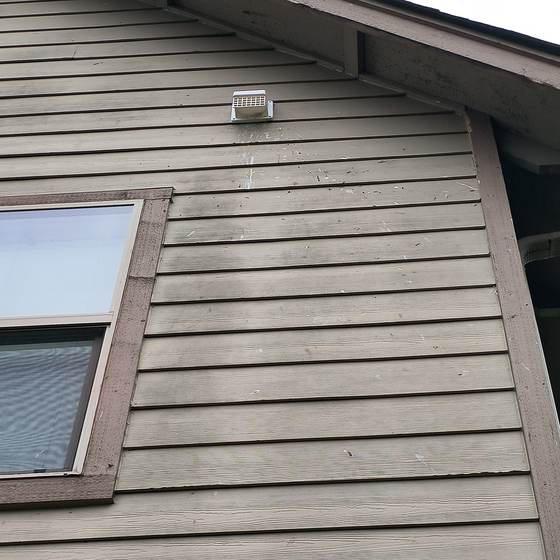
2. Seal all entry points
Small gaps give mites easy access indoors. Be sure to:
- Caulk cracks in siding and the foundation
- Seal gaps around doors and windows
- Add or replace weather stripping as needed
Basement windows are a favorite gathering spot and are worth cleaning out and sealing thoroughly.
3. Targeted outdoor treatment
When clover mites become a recurring issue, an exterior treatment can help:
- Treat the lower 3 feet of the foundation
- Create a perimeter zone extending 6 to 10 feet out from the home
These treatments work as a barrier at the point where the mites cross onto the building, rather than as a reaction after they’re already in the living space.
When to call a professional
Some clover mite seasons get overwhelming because of a combination of factors:
- Lawn conditions, particularly new or heavily fertilized turf
- Landscaping planted tight against the foundation
- Sharp swings in temperature in spring and fall
If clover mites turn up year after year despite the barrier and the sealing, a professional treatment plan is a reasonable next step.
That’s where Sasquatch Pest Control comes in. We can handle the inside of the home and the exterior perimeter, and where a severe case really is coming out of the lawn itself, we can put you in touch with a company that treats turf. We know the local pest behavior and the seasonal pattern, and the aim is to stop the migration before it reaches your walls.
Safe and responsible treatment
We only use label-approved products and follow the label’s safety directions, with an eye to:
- Your family
- Your pets
- Local pollinators
- The wider environment
We recommend prevention first, and use a product only where it’s genuinely needed.
Stop clover mites before they take over
If clover mites are showing up in your home, or you’d rather head off next spring’s arrivals before they start, Sasquatch Pest Control is ready to help.
We Squatch your back.
Originally published on our previous website at
/clover-mites-invading-your-home/. Brought across August 31, 2026, with the text
left as it was written apart from corrections to anything that is no longer
accurate.
Related posts
- Understanding and Combating Flea Infestations in Your Home
- Effective Strategies for Mouse-Proofing Your Home
- Summer Pest Control for Commercial Properties in Whatcom County
- The Commercial Property Manager's Winter Pest Checklist for Whatcom County
- What Pests Are Common in Bellingham, WA? A Complete Seasonal Guide
- Defending Lynden Homes: The Power of Pest Control Services
Pest problem in Whatcom County?
Family-owned, no long-term contracts, and every treatment is backed by our 100% Service Guarantee.
Most calls in Whatcom County are out within 1–2 days, about 3 during the late-summer peak.
Last updated