Brown Recluse Spiders: Separating Fact From Fiction in Washington State
Call 360-410-2199 Request a free inspection
Brown recluse spiders are not found in Washington State, yet they are often wrongly blamed for bites and for encounters with native spiders like the hobo spider or the giant house spider. The misconception is persistent enough that it is worth setting out plainly what does and does not live here.
What are brown recluse spiders?
Brown recluse spiders (Loxosceles reclusa) are known for their venomous bite and their reclusive habits. Their range is the central and southern United States. They have no established population in Washington State, and verified records here are essentially absent. The occasional Washington “brown recluse” report almost always turns out to be a misidentified local spider. On the rare occasion a genuine specimen does surface, it arrived as a single hitchhiker in freight or belongings shipped from within the spider’s actual range, and a hitchhiker is not a population. Where they do live, they favor warm, dry, undisturbed spaces such as attics, basements, and storage areas.
Common misidentifications in Washington
Because brown recluse spiders are not present here, bites and sightings get attributed to them by default. The species most often mistaken for one include:
- Hobo spiders (Eratigena agrestis) — a common funnel-web spider in the Pacific Northwest, found in basements, crawl spaces, and woodpiles. They look intimidating, but they are not the danger they were once described as. The claim that hobo bites cause necrotic wounds rested on studies that later research did not support, and the CDC removed the hobo spider from its list of venomous spiders — the current federal guidance for outdoor workers names only the black widow and the brown recluse. The Washington State Department of Health states that hobo spiders are not considered dangerous as previously thought, and that there is no evidence their venom has caused skin necrosis in people.
- Giant house spiders (Eratigena duellica) — closely related to the hobo spider, this large species is fast-moving and frequently enters homes, especially in the fall. Older references list it as Eratigena atrica, a name now treated as a doubtful catch-all. Harmless.
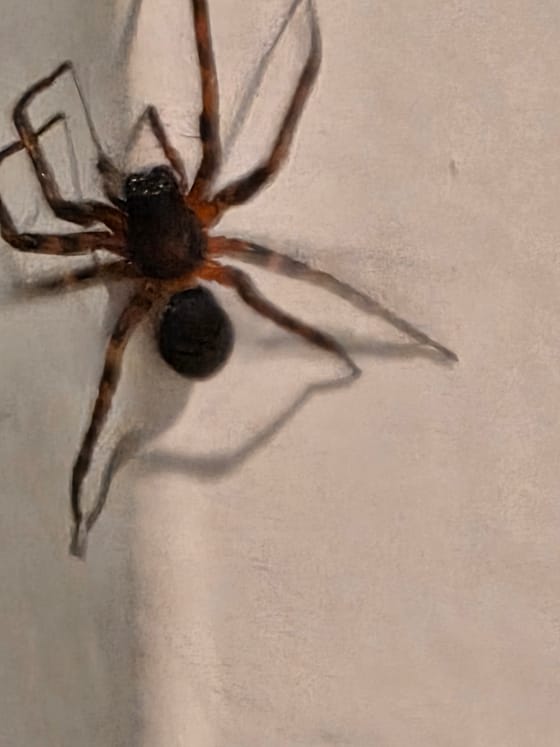
- Yellow sac spiders (Cheiracanthium spp.) — small, pale spiders that are sometimes blamed for bites. They will bite if pressed against skin, but the result is mild, localized pain and redness, nothing like the wound a brown recluse is capable of.
A useful check: the brown recluse is identified by six eyes arranged in three pairs and a uniformly colored abdomen and legs, not by the violin marking most people go looking for. That marking is subtle, varies a great deal, and appears on plenty of unrelated spiders. Identification from a phone photo of a squashed spider is guesswork, which is part of why the misattribution is so widespread.
Practical spider control
Even though brown recluse spiders do not live in Washington, native spiders can still become a nuisance. What actually works is fairly simple:
- A walk around the property to find the harborage spiders are using — woodpiles, clutter, dense vegetation against the walls, undisturbed corners — and clear it
- Exterior and interior treatments at the foundation, entry points, and the problem areas inside
- Web and egg sac removal, which is one of the more effective steps and one a homeowner can keep up between visits
- Reducing the insect population the spiders are feeding on, since spiders follow their food and a heavy spider presence usually means something else is available to hunt
- A plan matched to the property, rather than the same treatment everywhere
If you are unsure what you have
If you have found a spider you are worried about, take a clear photo or catch it in a sealed container and get in touch. We can usually tell you what it is, and in almost every case around here it is a harmless local species. If spiders are a regular problem in your house rather than a one-off, we will come out and take a look and work out what is worth doing.
Originally published on our previous website at
/brown-recluse-spiders/. Brought across August 31, 2026, with the text
left as it was written apart from corrections to anything that is no longer
accurate.
Related posts
- Are Black Spiders in Washington State Dangerous? What You Need to Know
- Tiny Black Spiders in Washington State: What You Need to Know
- Bumble Bees in Washington State: Essential Pollinators and How to Safely Manage Them
- Carpenter Ants vs Sugar Ants: What's the Difference and Which Do You Have?
- Clover Mites Invading Your Home? Here's What Bellingham Homeowners Need to Know
- Understanding and Combating Flea Infestations in Your Home
Pest problem in Whatcom County?
Family-owned, no long-term contracts, and every treatment is backed by our 100% Service Guarantee.
Most calls in Whatcom County are out within 1–2 days, about 3 during the late-summer peak.
Last updated