
Tiny Black Spiders in Washington State: What You Need to Know
Call 360-410-2199 Request a free inspection
Tiny black spiders might be small in size, but their presence can cause big concerns for homeowners in Washington state. These arachnids, often found lurking in corners, crevices, and even on ceilings, can be a source of anxiety for anyone with a strong dislike of spiders. Here is some plain information about these eight-legged visitors and what actually helps keep them at bay.
Identifying tiny black spiders
These small spiders are typically dark in color, ranging from deep brown to black. They vary in appearance, but they share the same broad traits: small size, and delicate, spindly legs. “Tiny black spider” is not one species. In Washington homes the description usually covers young cellar spiders, small cobweb spiders, and the occasional jumping spider, all of which are harmless.
Common habitats
Tiny black spiders are adept at finding cozy hiding spots in homes across Washington state. They often take up residence in corners, behind furniture, in basements, and in attics. Their preference for dark, undisturbed areas means they can go unnoticed for a long time, and it is usually the webs rather than the spiders that get spotted first.
Potential concerns
While tiny black spiders are generally harmless to people and pets, their presence can still be unsettling. For anyone who is genuinely afraid of spiders, even a single sighting is enough to spoil a room. Beyond that, accumulated webs in corners and along ceilings are simply unsightly.
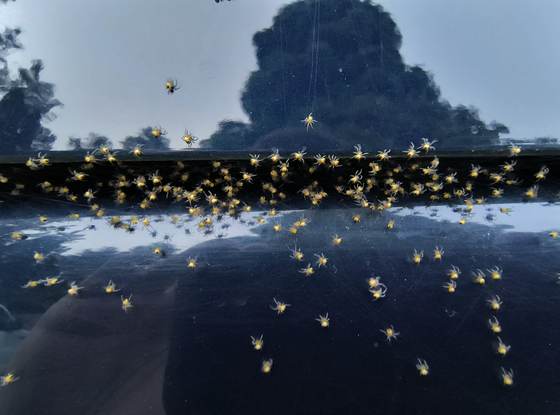
One correction worth making to how this is often described: spiders do not “multiply rapidly” indoors the way an insect infestation does. They are predators, they are territorial, and they do not build up into large indoor populations on their own. When spider numbers rise inside a house, the usual reason is that their food supply has risen — more flies, silverfish, earwigs or gnats to hunt. That is why the insects, not the spiders, are usually the thing worth fixing.
Did they come in from outside?
Partly, and less than the usual advice assumes. Some spiders do walk in at floor level, which is why door sweeps and sealed penetrations are worth the trouble. But the Burke Museum, which holds the state reference collection for arachnology in this region, describes house spiders as a largely indoor-adapted lineage rather than garden spiders that wandered in, and puts the share of indoor spiders that have ever been outdoors at generally under five percent. Cellar spiders, the commonest source of the small dark spider in a ceiling corner, are year-round indoor residents rather than seasonal arrivals.
Both readings point the same direction for a household. Sealing gaps is worth doing either way, and so is dealing with the insects, because a spider that hatched in your basement still only stays where there is something to catch. What neither reading supports is the idea that a house fills up with spiders because they marched in one autumn.
What actually helps
There are practical steps you can take to reduce tiny black spiders and stop them settling in. Regular cleaning and decluttering removes the hiding spots and undisturbed corners they favor. Vacuuming webs and egg sacs, indoors and out, is one of the most effective things you can do, and it costs nothing. Sealing cracks and crevices around the home keeps them from getting in to begin with. Managing exterior lighting near doors reduces the flying insects that draw spiders to the entrances of the house.
For persistent or widespread activity, professional treatment can help. The approach that works targets the whole picture: sealing entry points, clearing webs and egg sacs, and reducing the insect population the spiders are feeding on, with targeted treatment where it makes sense. Reduce the food and the access, and spider numbers fall on their own.
If tiny black spiders are becoming a regular presence in your home, we can come out and take a look, identify what you actually have, and tell you what is worth doing about it.
Originally published on our previous website at
/tiny-black-spiders-in-washington/. Brought across August 31, 2026, with the text
left as it was written apart from corrections to anything that is no longer
accurate.
Related posts
- Are Black Spiders in Washington State Dangerous? What You Need to Know
- Brown Recluse Spiders: Separating Fact From Fiction in Washington State
- Understanding Bed Bugs: Identification, Bites, and Prevention
- Understanding Wasps vs. Yellowjackets
- Unwanted Buzzing: How to Locate the Best Beehive Exterminator Near You
- Dealing With Wasp Stings: What to Do First
Pest problem in Whatcom County?
Family-owned, no long-term contracts, and every treatment is backed by our 100% Service Guarantee.
Most calls in Whatcom County are out within 1–2 days, about 3 during the late-summer peak.
Last updated