
Cockroaches in Washington State
Yes. WSU names four pest cockroaches in Washington — German, American, brownbanded and Oriental — and describes the German cockroach as the one most commonly found in the Pacific Northwest. Nearly every genuine indoor infestation here is that species. The large outdoor ones people find are usually wood cockroaches, which do not breed inside.
Call 360-410-2199 Request a free inspection
What to do, in order
- Look at size and markings first: half an inch and two dark stripes behind the head means German cockroach, and that is the one that matters.
- Note where you found it. A kitchen or bathroom at night points indoors; a woodpile, a garage or a porch light points at a wood cockroach.
- Check whether there is more than one. A single large roach in a garage in July is a very different thing from several small ones behind a kettle.
- Look for the secondary signs before deciding — droppings like coarse pepper, a musty smell, and the pale egg cases wedged in tight corners.
- Do not set off a fogger. It scatters a German cockroach population into the walls and makes the next treatment harder.
- Call us with what you found and where. German cockroaches need a baiting program and the others usually need nothing at all.
Yes, and the species matters more than the answer
Washington has cockroaches. It does not have the outdoor roach population of Texas or Florida, which is what most people mean when they ask, and the distinction is worth drawing because it changes what finding one means.
WSU Pestsense covers four pest cockroaches for this state: the German cockroach, the American cockroach, the brownbanded cockroach and the Oriental cockroach. It describes the German cockroach as the one most commonly found in the Pacific Northwest, and that is a fair description of what we see on jobs — it is not close.
Alongside those there are native wood cockroaches, which live outdoors, wander in, and do not establish. Telling those two situations apart is most of what this page is for.
The German cockroach, which is the real one
Small, striped, indoors, and fast.
WSU puts the adult at about half an inch long, pale brown, with two dark brown lengthwise stripes on the shield behind the head. Those stripes are the single most useful identification character in this whole subject, because they tell you immediately that you are dealing with the species that will not simply walk back out again.
The German cockroach lives indoors year-round. It cannot survive a Whatcom County winter outside, which means a population in a building came from somewhere else and stays where it is. It breeds faster than any other roach here, it hides in warm tight spaces — behind and beneath kitchen appliances, in the voids around pipework, in the hinge recesses of cabinet doors — and it is most active at night.
How they arrive is boxes, bags, used appliances, deliveries and shared walls, and cockroach control goes through the entry routes in detail. Apartment buildings move them between units through plumbing chases, which is why apartment pest control treats a roach problem as a building problem rather than a unit problem.
The other three
Present here, and much less often the answer.
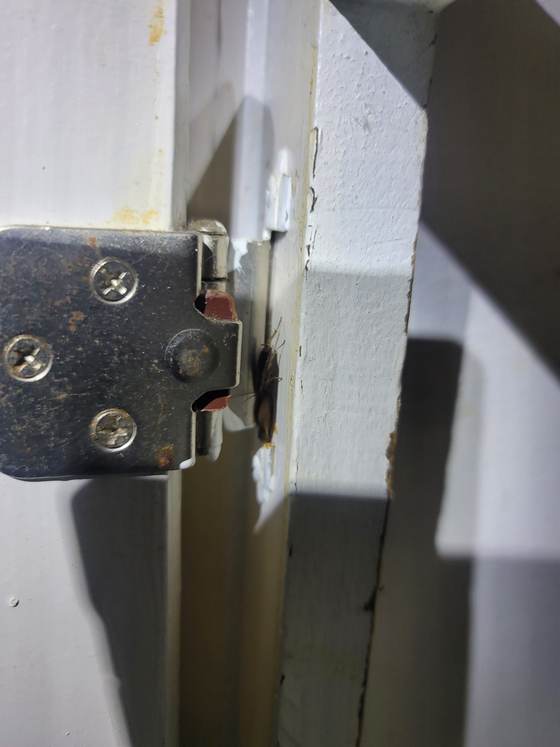
American cockroach. WSU calls it the largest cockroach in Washington, reddish-brown, with adults reaching an inch and a half. In this climate it turns up in warm damp commercial settings — boiler rooms, basements, drains — far more often than in houses.
Oriental cockroach. One to one and a half inches, dark brown to black, with shorter wings. Associated with cool damp places: crawlspaces, drains, under porches. In a county built on wet crawlspaces, this one is more plausible than people expect, and it is usually a moisture question first.
Brownbanded cockroach. Half to five-eighths of an inch, reddish-brown to dark brown with lighter bands across the wings. Uncommon here, and it behaves differently from a German cockroach — it spreads through a building rather than concentrating in kitchens and bathrooms.
Wood cockroaches, which are the ones you keep finding
The large roach on the porch in July is almost certainly not an infestation.
Wood cockroaches live outdoors in leaf litter, under loose bark, in woodpiles and compost. Males fly, they are drawn to lights, and in early summer they wander into garages, sheds and houses in ones and twos. The important part: they do not breed indoors and do not become established there.
What gives them away is the pattern rather than the animal. A wood cockroach appears singly, often during the day, often in a garage or near a door, usually in June or July, and often near a light. A German cockroach appears at night, near food or water, in a kitchen or bathroom, and rarely alone.
If the roaches you find are outdoor species, the work is exclusion and housekeeping — firewood off the house, leaf litter pulled back, door sweeps that touch — and not a treatment. That list is in sealing a building before fall.
What a real infestation looks like
Not the roach. The things around it.
- Droppings like coarse ground pepper along the edges of shelves, inside cabinet hinges and behind appliances.
- A musty, oily smell in a kitchen, which becomes noticeable at a population size most people have already reached by the time they call.
- Egg cases — small, pale, ridged capsules wedged into tight corners and under the lips of shelves.
- Smear marks in damp areas where roaches travel repeatedly.
- Daytime sightings, which generally mean the harborage is already full.
Any two of those in a kitchen is a German cockroach population, whatever the one roach you actually saw looked like.
What we do, and the one thing not to do first
The one thing not to do is set off a fogger.
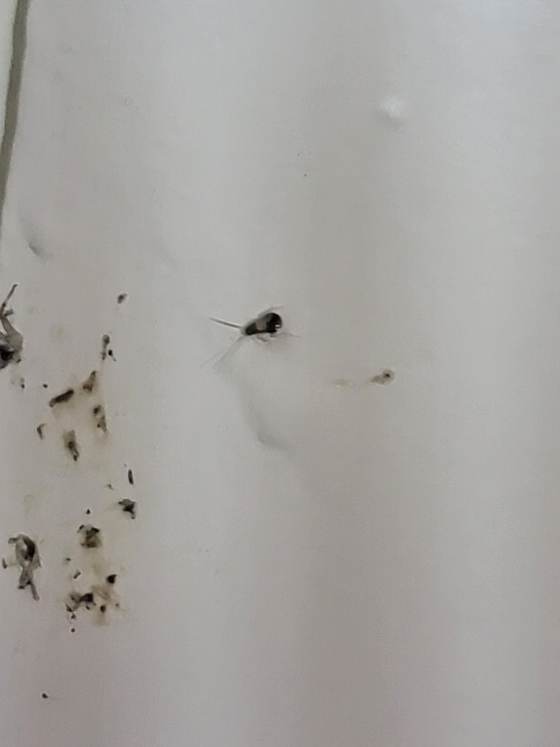
Total-release foggers are the most common reason a straightforward German cockroach job becomes a difficult one. They do not reach into the voids where the population actually lives, they push roaches deeper into wall and cabinet cavities, and the residue they leave on surfaces makes the bait those roaches would otherwise have eaten unattractive. We have been called to plenty of jobs that were twice the work because of one.
What works is a baiting program with proper placement, repeated, with sanitation and harborage reduction alongside it, and with the kitchen treated as a system rather than as a set of surfaces. WSU’s own guidance is that baits work best when competing food is removed and that control can take a week or more to become visible. The full approach is on cockroach control.
And if what you have turns out to be a wood cockroach that came in under the garage door, we would rather tell you that and leave you with a door sweep to buy than sell you a treatment program for an animal that was never going to stay.
Frequently asked questions
Are there cockroaches in Washington state?
Yes. WSU Pestsense covers four pest species here — German, American, brownbanded and Oriental — and names the German cockroach as the one most commonly found in the Pacific Northwest. Washington does not have the outdoor roach density of the South, but indoor infestations are entirely ordinary.
Which cockroach is most common in Washington?
The German cockroach, by a wide margin. WSU describes adults as about half an inch long, pale brown, with two dark lengthwise stripes on the shield behind the head. It lives indoors year-round, breeds quickly, and is responsible for nearly every infestation we are called to in this county.
What are the big cockroaches I see outside?
Usually wood cockroaches, which live outdoors in leaf litter, under bark and in woodpiles. They wander in, often at night and often drawn to lights, and they do not breed indoors or become established there. Finding one is not the start of an infestation.
Do cockroaches survive Washington winters?
Indoors, easily — a heated building is a tropical climate as far as a German cockroach is concerned, which is why they are a year-round problem rather than a summer one. Outdoor species overwinter outside in sheltered places and are simply less visible until spring.
Does finding one cockroach mean I have an infestation?
It depends entirely on which one and where. One large roach in a garage in summer is usually a wanderer. One small striped roach behind a kitchen appliance usually is not, because German cockroaches hide well and the one you saw is rarely the only one.
Are cockroaches a sign of a dirty house?
No, and this is the part worth saying plainly. German cockroaches arrive in boxes, bags, used appliances and shared walls. Spotless homes and brand-new apartments get them. Sanitation decides how fast a population grows, not whether it arrives.
Can I get rid of German cockroaches myself?
Sometimes, early, with patience and good bait placement. What usually goes wrong is a fogger or a surface spray, which scatters the population deeper into voids and contaminates the bait they would otherwise have eaten. That turns a short job into a long one.
Cockroach Control in Whatcom County?
Family-owned, no long-term contracts, and every treatment is backed by our 100% Service Guarantee.
Most calls in Whatcom County are out within 1–2 days, about 3 during the late-summer peak.
Last updated