Does Bellingham, WA Have a Termite Problem? What Homeowners Need to Know
Call 360-410-2199 Request a free inspection
It’s one of the most common misconceptions we hear: that Bellingham is too cool and wet for termites. The reality is that Whatcom County does have termites — they’re just different from the aggressive, fast-moving species that make headlines in the South. Our termite is the Pacific dampwood termite, drawn to wet, decaying wood. It doesn’t spread the way a Gulf Coast colony does, but over time it can do real structural damage, and in our climate the moisture that draws it is never far away. The good news: because our termites are so tightly linked to moisture, controlling moisture is one of the most powerful things you can do to protect your home.
We treat termites and other wood-destroying pests across Bellingham, Ferndale, Lynden, and the rest of Whatcom County. Here’s an honest picture of the situation in our area.
So do termites really live in the Pacific Northwest?
Yes. The Pacific Northwest is home to established termite species, and Washington homeowners deal with them every year. What’s true is that our termite pressure is generally lower and slower than in hot, humid regions — we don’t have the massive, aggressive colonies that can wreck a Southern home in a season. But “less aggressive” is not the same as “not a problem,” and plenty of Whatcom County homes have discovered termite damage the hard way.
The reason the myth persists is that termites here are less visible. They’re strongly tied to moisture and decay, so they tend to establish quietly in the damp, hidden parts of a structure — crawl spaces, wet framing, and wood in contact with soil — rather than announcing themselves with dramatic swarms in the living room. Out of sight, out of mind, until a repair project turns up the damage.
What kinds of termites are in Whatcom County?
Pacific dampwood termite
The Pacific dampwood termite is the signature termite of the Pacific Northwest and one of the largest termites in the country. As the name says, it targets wood with high moisture content — wood that’s already damp from a leak, poor drainage, or contact with wet soil. It doesn’t require contact with the ground the way subterranean termites do; it nests directly in the moist wood it’s eating.
That moisture dependence is the key to understanding it. Dampwood termites are essentially a symptom of a water problem. Where you have chronically wet wood — a leaking gutter dumping on a wall, a damp crawl space, rotting deck posts, wood buried against the foundation — you have the conditions dampwood termites need. Fix the moisture, and you remove much of what makes your home vulnerable.
What about subterranean termites?
This is where most online termite advice goes wrong for our area. The western subterranean termite exists in Washington, but it is genuinely uncommon in Whatcom County — it’s far more a feature of the drier, warmer parts of the state. The classic Southern termite playbook, where mud tubes are the first thing you look for and a soil trench around the foundation is the standard remedy, is not the right starting point for a Bellingham home. Our risk sits in wet wood, not in the soil.
The wood destroyers that actually matter here
If you’re worried about something eating your house in Whatcom County, these are the three to think about, and they’re all driven by the same thing:
- Moisture-driven decay fungi — plain wood rot, and by a wide margin the most common cause of structural wood damage in this climate. Decay fungi need wood that is genuinely wet. Around 20 percent moisture content is the threshold below which wood is considered safe; serious decay requires wood much wetter than that, approaching the fiber saturation point near 30 percent. Chronically soaked framing is what gets homes here.
- Carpenter ants — very common locally. They don’t eat wood, they excavate galleries to nest in it, and they overwhelmingly choose wood that moisture has already softened.
- Dampwood termites — less frequent than carpenter ants, and, like them, a downstream symptom of a water problem.
The common thread is water. That’s why moisture control is the single most effective wood-destroying-pest prevention strategy for a Bellingham home.
What are the warning signs in a Bellingham home?
Because our wood destroyers work quietly in damp, hidden areas, you have to know what to look for:
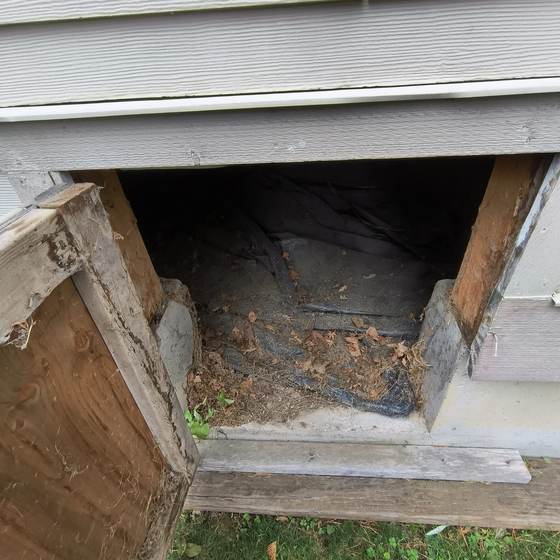
- Damaged or hollow-sounding wood — tap framing, trim, deck posts, and sill plates; damaged wood sounds hollow and may feel soft under a screwdriver tip
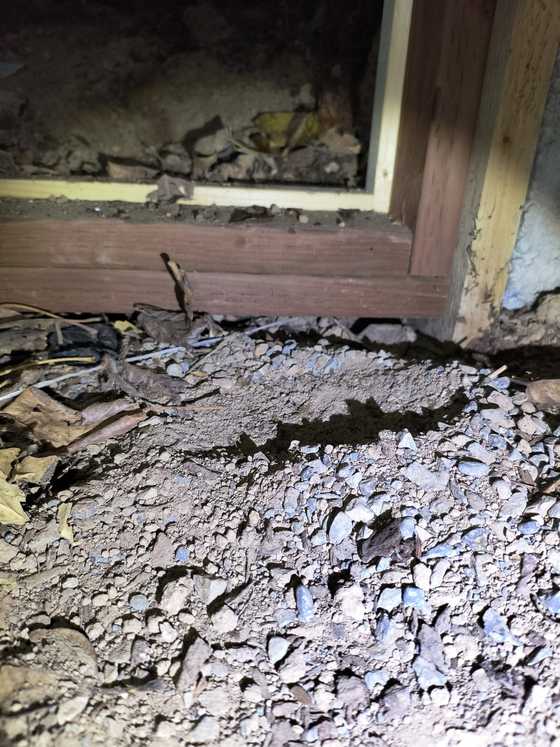
- Fecal pellets — dampwood termites push out small, hard pellets that accumulate below infested wood
- Coarse frass — carpenter ants push out sawdust-like debris mixed with insect fragments
- Discarded wings — small piles of equal-length wings near windows or light sources after a swarm (unequal wings point to ants instead)
- Damp, rotting, or crumbling wood, especially near leaks, gutters, crawl spaces, and soil contact
- Blistering or darkening wood and bubbling paint over affected areas
What makes a Bellingham home vulnerable?
Almost every wood-destroying-pest-friendly condition in our climate comes back to water and wood contact. The biggest risk factors are:
- Chronic moisture from leaking gutters and downspouts, poor drainage, or plumbing leaks
- Damp crawl spaces with inadequate ventilation or standing water
- Wood-to-soil contact — deck posts, stair stringers, fence pickets, and siding touching the ground
- Wood debris against the foundation — scrap lumber, buried form boards, stumps, and firewood
- Mulch piled against the house, holding moisture right at the foundation
- Existing wood rot, which softens wood and makes it especially attractive to dampwood termites and carpenter ants
How can I prevent termites in our wet climate?
In the Pacific Northwest, termite prevention is largely moisture management — which happens to overlap with preventing wood rot and carpenter ants too. Focus on:
- Fix leaks and drainage. Repair leaking gutters, downspouts, faucets, and plumbing, and direct water away from the foundation.
- Dry out the crawl space. Improve ventilation, address standing water, and consider a vapor barrier to reduce ground moisture.
- Break wood-to-soil contact. Keep deck posts, siding, and fence pickets from touching bare ground where possible.
- Clear wood debris away from the foundation — scrap lumber, stumps, buried wood, and firewood stored off the ground.
- Pull mulch back from directly against the house.
- Repair rot promptly, since decaying wood draws both dampwood termites and carpenter ants.
- Check the damp parts of your house periodically — the crawl space, under sinks, behind gutters — so quiet activity doesn’t go unnoticed for years.
Prevention lowers your risk, but it can’t undo a colony that’s already established. If you’re seeing signs, it’s worth having someone come out and look.
Should I worry if I haven’t seen anything?
Our wood destroyers are easy to miss, which is the honest reason to stay attentive rather than assume the house is fine. They favor hidden, damp areas and don’t announce themselves, so many Whatcom County homeowners don’t realize there’s activity until damage turns up during a remodel or a trip into the crawl space.
Damage from termites and other wood-boring insects is also typically excluded from homeowner’s insurance policies, so the cost of ignoring a problem falls on you. Keeping the house dry and dealing with activity early is a sensible way to protect one of your largest investments — especially for older homes, homes with crawl spaces, or homes with any history of moisture issues.
How does Sasquatch handle termites in Bellingham?
We come out and take a look at the structure and the conditions around it — checking the damp wood, the crawl space, and the wood-to-soil contact points these pests exploit. Because our region’s wood destroyers are so moisture-driven, we pay close attention to the water issues that make a home vulnerable in the first place.
If there’s active termite or carpenter ant work going on, we’ll walk you through what’s happening and lay out a clear treatment plan matched to the species and situation. You get a written record of the treatment we perform and a plan for follow-up. No scare tactics, no contracts, no hidden fees. Pricing depends on the property and the scope of the work, so we quote it after a visit.
Common questions
Does Bellingham really have termites?
Yes. The idea that the Pacific Northwest is too cool and wet for termites is a myth — Whatcom County has an established termite species, the Pacific dampwood termite. Our termite pressure is generally lower and slower than in hot, humid regions, so we don’t see the explosive colonies of the South, but dampwood termites can cause real structural damage over time, often quietly in damp, hidden parts of a home.
What kinds of termites live in the Bellingham area?
Mainly one: the Pacific dampwood termite, one of the largest termites in the country. It targets wood with high moisture content and nests directly in damp or decaying wood, so it’s essentially a symptom of a water problem. Western subterranean termites exist in Washington but are uncommon in Whatcom County, and drywood and Formosan termites are not established here at all despite showing up constantly in national articles.
Why are Pacific Northwest termites less of a threat than Southern ones?
Our cooler climate slows termite activity and reproduction compared with hot, humid regions, and we don’t have the aggressive species that can devastate a home in a single season down South. That said, “less aggressive” isn’t “harmless” — local termites still cause meaningful damage, and because they work quietly in damp, hidden areas rather than swarming visibly, they’re often not discovered until damage surfaces during a remodel.
Should I be looking for mud tubes?
Not as your first move. Mud tubes are a subterranean termite sign, and subterranean termites are uncommon in Whatcom County. Advice built around mud tubes and soil trenching is written for regions where subterranean termites dominate. Here, the more useful things to check are wet wood, soft or hollow-sounding framing, fecal pellets below infested wood, and the moisture conditions in your crawl space.
What are the warning signs in a Bellingham home?
Look for wood that sounds hollow or feels soft when tapped, small hard fecal pellets accumulating below infested wood (a dampwood termite sign), coarse frass mixed with insect parts (a carpenter ant sign), discarded equal-length wings near windows after a swarm, and damp or rotting wood near leaks, gutters, and soil contact. Because our wood destroyers favor hidden, moist areas, these subtle clues are often the only warning.
How do I prevent termites in such a wet climate?
In our region, prevention is largely moisture management. Fix leaking gutters, downspouts, and plumbing; direct water away from the foundation; dry out and ventilate the crawl space; break wood-to-soil contact from deck posts, siding, and fences; clear wood debris and firewood away from the house; pull mulch back from the foundation; and repair rot promptly. Reducing moisture removes much of what makes a home vulnerable, though it won’t undo a colony that’s already established.
Do you treat termites in Bellingham and Whatcom County?
Yes. We treat termites, carpenter ants, and other wood-destroying insects throughout Bellingham, Ferndale, Lynden, Blaine, and the surrounding Whatcom County communities. We’ll come out, take a look at the wood and the moisture conditions around it, and give you honest options and a clear treatment plan — no contracts, no scare tactics, and a written record of the work performed.
Originally published on our previous website at
/termites-bellingham-wa/. Brought across August 31, 2026, with the text
left as it was written apart from corrections to anything that is no longer
accurate.
Related posts
- How to Identify Termites
- Termite and Wood-Destroying Pest Control in Bellingham, WA
- The Blaine Peace Arch: A Symbol of Unity
- The Sasquatch Advantage in Preventative Pest Control
- The Ultimate Guide to Rodent Control: How to Find the Best Pest Control Services Near You
- The Vital Role of Proper Pest Control in Bow, WA
Pest problem in Whatcom County?
Family-owned, no long-term contracts, and every treatment is backed by our 100% Service Guarantee.
Most calls in Whatcom County are out within 1–2 days, about 3 during the late-summer peak.
Last updated