Why You're Seeing More Spiders in Your Bellingham Home This Fall
Call 360-410-2199 Request a free inspection
If spiders suddenly seem to be everywhere in your Bellingham home this fall — bigger ones in the corners, webs across the porch overnight, the occasional fast-mover darting across the floor — you are not imagining it, and you are not alone. Fall is peak spider season in the Pacific Northwest for one main reason: it is mating season, so mature male spiders leave their webs and roam in search of females. What you are seeing is a change in behavior rather than an arrival. The good news is that the vast majority of spiders you will meet in Whatcom County are harmless, and a few simple steps go a long way toward keeping their numbers down.
The fall spider surge is one of the most common seasonal questions we get across Bellingham, Ferndale, Lynden, and greater Whatcom County. Here is what is actually going on and what to do about it.
Why do I see so many more spiders in the fall?
It feels like a sudden invasion, but it is really a seasonal shift in behavior, and mostly it is about spiders that were already around becoming far more visible.
It’s mating season
Fall is when many spider species reach maturity and begin mating. Male spiders, which spend most of their lives hidden, leave their webs and wander in search of a mate. That is why the spiders you notice in fall are often larger and more mobile — they are mature males on the move, crossing floors, climbing walls, and turning up in places you do not usually see spiders. They were there all along; now they are out in the open.
It is not the cold — and this is where most fall spider articles go wrong
The intuitive explanation, that spiders are coming inside to escape the weather, is the part nearly everybody gets wrong, this post included before it was corrected. Spiders here overwinter perfectly well outdoors and they are not seeking central heating. What concentrates spiders anywhere is food. They settle where there are insects to catch, which is why garages, basements, crawl spaces, eaves and lit entryways carry the most of them, and carry them all year rather than seasonally.
Worth knowing alongside that: the Burke Museum, which holds the state reference collection for arachnology in this region, describes house spiders as a largely indoor-adapted lineage rather than garden spiders that wandered in, and puts the share of indoor spiders that have ever been outdoors at generally under five percent. So some of what you meet in September walked under a door, and some of it hatched in the building or the crawlspace beneath it. Both are happening. In either version the spiders were present before the month began, and what changed is how visible they are.
Which spiders am I likely seeing in Bellingham?
Whatcom County is home to a range of common, harmless spiders. The ones you are most likely to encounter in fall include:
- Giant house spider — a large, fast-moving brown spider that is a classic fall sighting in the Pacific Northwest. Its size startles people, but it is harmless and actually helps control other pests.
- Common house spider — a smaller spider that builds tangled cobwebs in corners, garages, and basements.
- Cross orbweaver (garden spider) — the large spider that spins circular webs across porches, eaves, and gardens in fall. Harmless and beneficial.
- Cellar spiders (daddy long-legs) — thin-legged spiders that hang in loose webs in basements and crawl spaces.
- Hobo spider — a brown funnel-web spider found in the region, and less common here than its name recognition suggests. Its old reputation for causing necrotic wounds has not held up: the claim rests on work that later research did not support, the CDC removed the hobo spider from its list of venomous spiders, and the Washington State Department of Health now states that hobo spiders are not considered dangerous as previously thought and that no evidence links their venom to skin necrosis. Telling one from a giant house spider by eye is not possible — that separation needs the reproductive structures under magnification — and for safety purposes it does not matter, because neither is dangerous.
Are any of these spiders dangerous?
For the overwhelming majority, no. The spiders you will typically see around a Bellingham home are harmless to people and pets — they would rather flee than bite, and most are not capable of causing meaningful harm even if they did. In fact, they are doing you a favor by eating other insects.
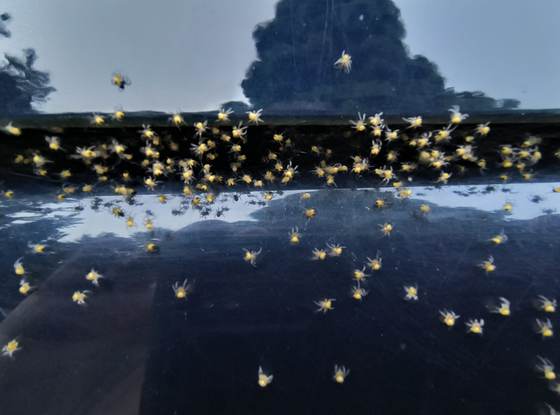
Western Washington is fortunate on this front: we do not have established populations of the medically significant spiders that worry people in other parts of the country. The western black widow is a Washington species that the state Department of Health describes as common to eastern Washington; its range follows the drier country east and south of the Cascades, so it is uncommon on this side of them and generally confined to dry, sheltered, undisturbed spots like woodpiles and utility boxes. The brown recluse is not established in Washington at all — verified records in the state are essentially absent, and the occasional report almost always turns out to be a misidentified local spider or, very rarely, a single hitchhiker that arrived in freight from elsewhere. It does not live and breed here.
That does not mean you should handle spiders — any spider can bite if trapped against skin, and reactions vary — but it does mean the fear of a serious bite is largely misplaced in our area.
If you are ever unsure, rather than trying to identify a spider by memory or a scary photo online, take a clear picture and give us a call. We can help you figure out what you are dealing with, and in almost every case it is a harmless local species.
How do I keep spiders out of my house this fall?
Spider control is really about two things: making it harder for spiders to get in, and removing what draws them, namely other insects. Handle those, and the spider population drops on its own.
Seal entry points
- Seal gaps around windows, doors, siding, and utility penetrations
- Repair torn window and door screens, and add door sweeps
- Screen vents and close gaps along the roofline and foundation
Reduce what attracts them
- Reduce indoor and outdoor clutter where spiders hide and web up — garages, basements, storage areas, and woodpiles
- Sweep away webs and egg sacs regularly, indoors and out, so populations do not build
- Manage exterior lighting, which attracts the insects spiders feed on. Consider warmer-toned bulbs or moving lights away from doors
- Keep other insects in check, since fewer bugs means less food and fewer spiders
- Vacuum regularly, especially in corners, along baseboards, and in undisturbed areas
What’s the best way to deal with a spider I find indoors?
For a single spider, the simplest humane approach is the cup-and-paper method: place a cup over it, slide a piece of paper underneath, and release it outside. A vacuum is efficient for spiders, webs, and egg sacs alike — just empty it promptly. There is rarely a need to reach for spray on an individual spider, and squishing is not necessary if you would rather relocate them, given how many are actively beneficial.
If you are consistently seeing large numbers, finding webs faster than you can clear them, or simply want to enjoy your home in fall without the constant surprises, that is where a professional approach helps, because it targets the whole picture rather than one spider at a time.
When should I call Sasquatch about spiders?
A few fall spiders are normal and, frankly, beneficial. But it is worth calling us if you are dealing with persistent heavy activity, webs building up around the home faster than you can knock them down, or spiders that are genuinely affecting your comfort in your own house. It is also worth a call if you have found something you are worried about and want it identified.
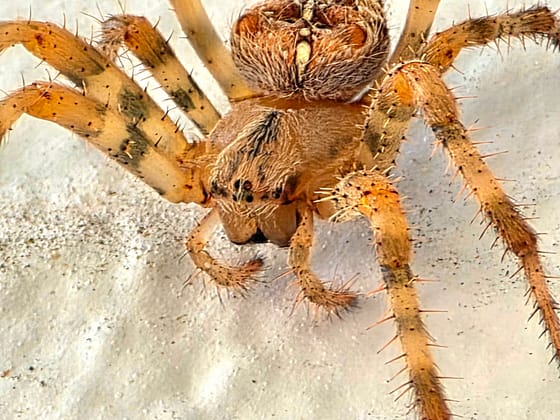
Our approach focuses on the root of the problem: sealing entry points, clearing webs and egg sacs, and reducing the insect population that feeds them, with targeted treatment where it makes sense. Reduce the food and the access, and the spiders follow. It is a Whatcom County fall staple we handle every year, and we will come out and take a look at no charge, with no contract and no scare tactics.
Common questions
Why do I suddenly see so many spiders in the fall?
Because it is mating season. Mature male spiders, which normally stay hidden, leave their webs and wander in search of females, which makes them far more visible as they cross floors and walls. It is not the cold: spiders here overwinter outdoors without difficulty and are not looking for heat. Most of what you see was already living in and around your house, and some of it — the Burke Museum would say most of it — has never been outdoors at all. What changed in September is activity, not address.
Are the spiders in my Bellingham home dangerous?
Almost never. The spiders you will typically see around Whatcom County homes — giant house spiders, common house spiders, garden orbweavers, and cellar spiders — are harmless to people and pets and would rather flee than bite. Western Washington does not have established populations of the medically significant spiders that worry people elsewhere: the western black widow belongs to the drier country east and south of the Cascades and is uncommon on this side, and the brown recluse is not established in this state at all. Handling spiders still is not advisable, but a serious bite is very unlikely in our area.
Do house spiders come inside from the yard each fall?
Partly, and less than you would think. Some mature males living along a foundation, in a window well or under a deck do cross a threshold in these weeks, which is why door sweeps make a visible difference. But the Burke Museum’s arachnology material describes house spiders as a largely indoor-adapted lineage rather than outdoor spiders that came in, and puts the share of indoor spiders that have ever been outdoors at generally under five percent. Both accounts point the same way for a household: the population was present before September, and what changes seasonally is activity and visibility, especially among the roaming males.
How do I keep spiders out of my house?
Focus on access and food. Seal gaps around windows, doors, siding, and utility lines; repair screens and add door sweeps; and screen vents. Then reduce what attracts them: clear clutter and webs, manage exterior lighting that draws their insect prey, keep other bugs in check, and vacuum regularly in corners and along baseboards. Since spiders follow their food, keeping other insects down is one of the most effective long-term spider controls.
What should I do with a spider I find inside?
For a single spider, the cup-and-paper method works well: place a cup over it, slide paper underneath, and release it outside. A vacuum handles spiders, webs, and egg sacs efficiently — just empty it promptly. Because so many local spiders are beneficial insect-eaters, there is usually no need to spray or squish an individual spider unless you prefer to. For persistent heavy activity, a broader approach works better than dealing with them one at a time.
Should I kill spiders or leave them alone?
That is up to you, but it is worth knowing that most spiders around your home are genuinely beneficial — they eat flies, mosquitoes, and other insects, and a healthy spider presence often means fewer other bugs. If a spider is not bothering you, relocating it outside is a fine option. If you are seeing large numbers or they are affecting your comfort, addressing the underlying insect population and entry points is more effective than picking off individuals.
Do you offer spider control in Bellingham and Whatcom County?
Yes. We handle fall spider problems throughout Bellingham, Ferndale, Lynden, Blaine, and the surrounding Whatcom County communities. Our approach targets the root causes: sealing entry points, clearing webs and egg sacs, and reducing the insects spiders feed on, with targeted treatment where it helps. Call us and we will come out and take a look, and we are happy to identify anything you are unsure about.
Originally published on our previous website at
/more-spiders-fall-bellingham/. Brought across August 31, 2026, with the text
left as it was written apart from corrections to anything that is no longer
accurate.
Related posts
- Mud Dauber Wasps in Washington State
- What Does Pest Control Cost in Bellingham, WA? (An Honest Pricing Guide)
- Safeguarding Your Home: Our Services in Blaine, WA
- Pest Control for Ferndale Homes and Yards
- The Homeowner's Complete Guide to Pest Prevention in the Pacific Northwest
- Pest Trends in Whatcom County: Year in Review and What's Coming Next
Pest problem in Whatcom County?
Family-owned, no long-term contracts, and every treatment is backed by our 100% Service Guarantee.
Most calls in Whatcom County are out within 1–2 days, about 3 during the late-summer peak.
Last updated