
Know Your Bees: Distinguishing Carpenter Bees from Bumblebees
Call 360-410-2199 Request a free inspection
Spring in Bellingham brings more than just flowers; it also ushers in the buzz of bees around our homes. Understanding which bees are buzzing by is crucial, especially when it comes to those that might pose a risk to your home’s structure or your outdoor activities. Sasquatch Pest Control is here to help you identify and differentiate between carpenter bees and bumblebees, two commonly mistaken types of bees.
Key Identifiers of Carpenter Bees and Bumblebees
Visual Differences:
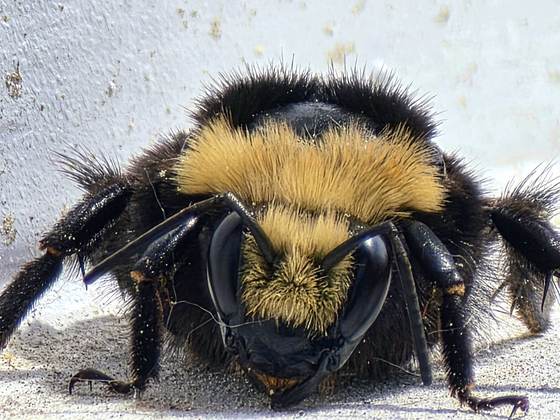
- Carpenter Bees: Roughly the same size as a bumblebee, sometimes a little larger, but with a shiny, black or blue-black body and a smooth, hairless abdomen. That bare, glossy rear end is the reliable tell. Their wings can appear iridescent in sunlight.
- Bumblebees: Fuzzy from head to tail, with black and yellow stripes. The hair is what makes them such good pollinators, since pollen sticks to it.
Worth knowing before you start looking: carpenter bees are far less common in northwest Washington than they are in warmer parts of the country. A big bee cruising around your yard here is much more often a bumblebee.
Behavioral Traits:
- Carpenter Bees: Solitary by nature, these bees are not aggressive unless provoked. Female carpenter bees can sting but rarely do so. Males may hover and dart at you and cannot sting at all. They are known for boring into wood to create nests.
- Bumblebees: These bees are social creatures living in colonies and can be defensive when their nests are threatened. They are capable of stinging repeatedly, which can be more problematic for those with allergies.
Understanding Their Impact and How to Manage Them
Carpenter Bee Challenges:
Their wood-boring habits can damage wooden structures over time, particularly where the same timber is tunneled year after year. It’s important to address potential nesting sites by sealing exposed wood and consulting pest control professionals if you notice recurring activity.
Bumblebee Encounters:
Typically nesting underground, bumblebees might be disturbed accidentally. While they are beneficial for pollination, their stings can be painful. Maintaining a tidy yard and managing overgrowth can help minimize unwanted encounters. A bumblebee colony well away from foot traffic is usually best left alone — it dies out on its own by late fall.
Prevention Tips for Homeowners
- Seal and Paint Wood: This discourages carpenter bees from nesting. Bare, weathered softwood is what they look for.
- Physical Barriers: Installing nets or screens can prevent access to potential nesting areas.
- Professional Consultation: For persistent issues with carpenter bees or bumblebees, contacting a pest control expert like Sasquatch Pest Control is recommended.
Sasquatch Pest Control: Your Partner in Bee Management
Whether you’re looking to prevent bees from establishing themselves around your home or need assistance dealing with an existing problem, remember that Sasquatch Pest Control has your back. Our team is ready to provide advice and treatment options tailored to your situation.
Remember, bees play a crucial role in our ecosystem, so it’s important to manage bee issues responsibly. Contact us for guidance on how to handle bee sightings safely.
Originally published on our previous website at
/know-your-bees/. Brought across August 31, 2026, with the text
left as it was written apart from corrections to anything that is no longer
accurate.
Related posts
- Ladybugs vs Asian Lady Beetles: Why They're Swarming Your Bellingham House
- What Bellingham Landlords and Property Managers Need to Know About Pest Control
- Why You're Seeing More Spiders in Your Bellingham Home This Fall
- Mud Dauber Wasps in Washington State
- What Does Pest Control Cost in Bellingham, WA? (An Honest Pricing Guide)
- Safeguarding Your Home: Our Services in Blaine, WA
Pest problem in Whatcom County?
Family-owned, no long-term contracts, and every treatment is backed by our 100% Service Guarantee.
Most calls in Whatcom County are out within 1–2 days, about 3 during the late-summer peak.
Last updated