When Do Wasps Build Nests in Bellingham, WA? (And How to Spot One Early)
Call 360-410-2199 Request a free inspection
When do wasps start building nests in Bellingham?
Wasp activity in Whatcom County follows the temperature. Overwintered queens become active as spring warms the region, typically in April and May. Each queen finds a sheltered spot, builds a small starter nest, and raises the first batch of workers on her own. By June those workers take over nest-building and foraging, and the colony expands rapidly through July and August.
So if you’re seeing a lone wasp scouting your eaves in spring, that’s often a founding queen — and that’s the ideal time to act, before she has hundreds of workers defending the nest.
What does the wasp life cycle look like over a Whatcom County year?
- Spring (April–May): queens emerge, choose nest sites, and start small nests solo.
- Early summer (June): the first workers hatch and take over expanding the nest.
- Mid-to-late summer (July–September): the colony peaks, populations swell into the hundreds, and wasps become noticeably more aggressive.
- Fall (October): the colony produces new queens, then the workers and old queen die off as it gets cold.
- Winter: only newly mated queens survive, hidden away until spring — the old nest is abandoned for good.
Which wasps and hornets are common around Bellingham?
Paper wasps
Paper wasps build the familiar open, umbrella-shaped nests you’ll find under eaves, in door frames, and inside mailboxes or grills. They’re less aggressive than yellowjackets but will defend the nest if disturbed.
Yellowjackets
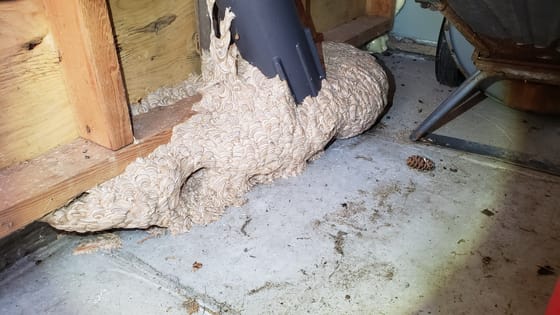
Western yellowjackets are the ones that ruin late-summer barbecues in Bellingham. They often nest underground or inside wall voids, they’re drawn to food and sugary drinks, and they’re the most aggressive wasp most homeowners here encounter — especially in August and September.
Bald-faced hornets
Despite the name, the bald-faced hornet is a large relative of the yellowjacket. It builds the gray, football-shaped paper nests you’ll spot hanging in trees, shrubs, or under eaves. These colonies can get big and defend their nests vigorously.
One local note: Whatcom County drew national attention a few years ago as the site of the first U.S. sightings of the northern giant hornet, once nicknamed the “murder hornet.” State agriculture officials have since declared it eradicated from Washington, and it isn’t a hornet local homeowners encounter in everyday life. The wasps and hornets above are the ones that actually matter around Bellingham homes.
Where do wasps like to build nests on Bellingham homes?
Wasps look for shelter from rain and wind, which the Pacific Northwest has plenty of. Common spots include:
- Under eaves, soffits, and roof overhangs
- Inside attics, wall voids, and gable vents
- Beneath decks, porches, and stair railings
- In sheds, garages, and detached outbuildings
- Inside dense shrubs, hedges, and low tree branches
- In the ground — abandoned rodent burrows are a favorite for yellowjackets
- Inside utility meter boxes, grills, and rarely used mailboxes
How can you spot a wasp nest early?
Early nests are small and easy to miss, so watch for the behavior more than the nest itself:
- A single wasp repeatedly flying to and from the same spot on your house
- A small papery nest the size of a golf ball or walnut under an eave or railing
- Steady wasp traffic in and out of one gap, vent, or hole in the ground
- Faint scraping or chewing sounds as wasps gather wood fiber for the nest
- More wasps than usual patrolling one area of the yard or house
Why is spring the best time to deal with wasps?
In spring, a nest usually holds just the founding queen and a small comb. Removing it then is quicker and far less risky than treating a mature summer colony with hundreds of defensive workers. Handling nests early also prevents the large, aggressive colonies that make August and September miserable — and dangerous for anyone with a sting allergy.
What should you do if you find an early nest — and why not knock it down yourself?
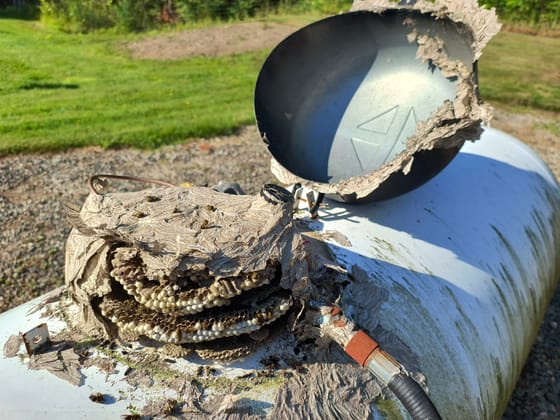
It’s tempting to grab a can of spray or a broom, but DIY wasp removal is a common way people end up in urgent care. Yellowjackets and hornets defend their nests aggressively and can sting repeatedly, and knocking down a nest often provokes the whole colony at once. Nests hidden in wall voids or underground are especially risky, because you can’t see how big they really are.
The safer move is to keep your distance, avoid swatting or spraying, and call a professional. Sasquatch will identify the species, locate the full nest, and remove it safely — then help seal the entry points so wasps are less likely to rebuild in the same spot next spring.
Common questions
What month do wasps become active in Washington?
In the Bellingham area, overwintered queens usually become active in April and May as temperatures rise, then start small nests that grow through summer. Peak activity and aggression come in August and September.
Are wasps more aggressive at certain times of year?
Yes. Wasps are most defensive and aggressive in late summer and early fall, when colonies are largest and their natural food sources dwindle. That’s when yellowjackets start crashing picnics and reacting quickly to any threat near the nest.
Do wasps reuse last year’s nest?
Generally no. In Washington’s climate, wasp and hornet colonies die off each fall and the nest is abandoned. New queens build brand-new nests the following spring, though they often choose the same favorable locations year after year.
What attracts wasps to my yard?
Food and shelter. Open garbage, fallen fruit, pet food, sugary drinks, and outdoor eating draw foraging wasps, while eaves, vents, shrubs, and ground burrows offer nesting sites. Sealing gaps and managing food and trash reduces the appeal.
Are all wasps dangerous, or are some helpful?
Many wasps are actually beneficial — they prey on caterpillars, flies, and other pests. The problems start when a nest is near doors, decks, play areas, or walls where people are likely to disturb it. Location and species determine whether a nest needs to go.
How do I tell a wasp nest from a beehive?
Wasp and hornet nests are made of chewed wood that looks like gray or tan paper — open umbrella shapes for paper wasps, enclosed footballs for hornets. Honeybee nests are built of wax and often tucked inside cavities. If you’re unsure, don’t disturb it; we can come out and identify it for you.
Originally published on our previous website at
/when-do-wasps-build-nests-bellingham/. Brought across August 31, 2026, with the text
left as it was written apart from corrections to anything that is no longer
accurate.
Related posts
- Stinging and Flying Insect Control in Whatcom and Skagit County
- Understanding Wasps vs. Yellowjackets
- Dealing With Wasp Stings: What to Do First
- Why Ants Invade Bellingham Homes Every Spring (And How to Stop Them)
- Why Do I Have Millipedes in My Home?
- Why Earwigs Are Invading Your Home (And What to Do About It)
Pest problem in Whatcom County?
Family-owned, no long-term contracts, and every treatment is backed by our 100% Service Guarantee.
Most calls in Whatcom County are out within 1–2 days, about 3 during the late-summer peak.
Last updated